Frank Roidl, SVP Sales DACH, explains where mid-sized companies seek external security help, why NIS2 caught many off guard and how AI, sovereignty and VMware alternatives shape 2026.
Security staff are scarce, attackers are getting faster and regulation is reaching the mid-sized business. At it-sa 2026 in Nuremberg, Frank Roidl, Senior Vice President Sales DACH at Getronics, explained how the IT service provider responds: with managed security, a vendor-neutral choice of technology and a sober view of artificial intelligence.
Getronics had no booth of its own at the trade show; the conversation took place in the press center. At the core of the offering is security as a managed service, with Managed Detection and Response (MDR) and Security Operations Center (SOC) services. According to Roidl, the SOC has been run from a center in Spain for years. Security for operational technology (OT) is the newer building block and is now being expanded across the group, with a focus on production environments. According to the company’s website, the cybersecurity portfolio also covers governance and business continuity support for users, identities, infrastructure and cloud.
Many companies struggle to find security staff. Getronics runs its security department in Barcelona and has three security consultants in Germany. At the same time, Roidl sees more and more attacks that use artificial intelligence, and mentioned vendors such as Darktrace and Vectra in this context. The time between a vulnerability becoming known and being exploited has shrunk sharply: he cited a PHP vulnerability that was used within a single day. He described the situation as a cat-and-mouse game that is very hard to win.
Getronics describes itself as vendor-agnostic and aims to bring in the best solution for each case. Microsoft, Fortinet and Cisco are among its partners, but the company says it is open to others. It listens to customers, avoids isolated solutions, onboards new vendors, watches the market and runs proofs of concept on customer premises, for instance in MDR.
NIS2 surprised most mid-sized companies, Roidl said, and many are now directly affected. The first step is analysis: establishing processes, documentation and resilience. Getronics helps with the inventory. Companies need to invest, he said, but not flood their environment with tools. Organizational consulting matters just as much: processing the findings, setting up the processes behind them, reporting via the portal and starting mitigation. That is expensive and rarely achievable to 100 percent, which is where managed service providers come in, given that qualified staff are scarce and costly. Customers ask for this service frequently. In the supply chain the focus tends to be technical, while manufacturers set other priorities. Roidl’s approach is to raise awareness, offer services and open a dialogue, because security has to be lived by everyone.
Getronics comes from the workplace business, and the full desktop remains part of the offering. Security plays a major role there: which services users can reach, how awareness is raised, which policies apply. Data should sit in the company cloud, while working locally creates risks, Roidl said. On its website, the company describes an AI-supported IT service desk that is available around the clock in more than 130 languages.
In AI, he sees a need for discipline. Token pricing is often very aggressive, and the follow-on costs are underestimated. What runs on-premises, what runs in the cloud and how policies are applied has to settle in over time, and setting limits by role is difficult. Some AI projects are started and later buried. Agents need clear boundaries to avoid uncontrolled growth: policies must be defined cleanly, and agents must not develop a life of their own. In his view, the AI world resembles the blockchain hype in places, with a lot of Wild West. A recent article by Rubens Daniel, Getronics’ Chief Technology Officer for Latin America, takes a similar line: AI spending is variable and hard to forecast, so rules belong at platform level and results should be measured before scaling.
For 2026, Roidl named several topics on the radar: the intelligent use of AI, for example in HR, with Jira and in a virtual assistant for the service desk, and above all data sovereignty. Customers increasingly want data from data centers not to leave Germany and look for alternatives to Microsoft 365. Migration away from VMware is another driver. Red Hat OpenShift with KubeVirt attracts interest for its security and flexibility. Customers also look at Proxmox, which is becoming better suited for production, but in critical infrastructure (KRITIS) vendor support and liability risks weigh heavily. With BladeCenter systems at end of life, Roidl also sees an opening in hardware replacement: hyperconverged systems and VMware alternatives allow a new operating model.
According to the company, Getronics was founded in Amsterdam in 1887 and serves customers in more than 185 countries through the Global Workspace Alliance it leads. In 2025, it was listed for the fifth time in the Gartner Magic Quadrant for Outsourced Digital Workplace Services, as a Niche Player. In DACH, its message is that it wants to accompany customers on the path rather than sell individual tools.
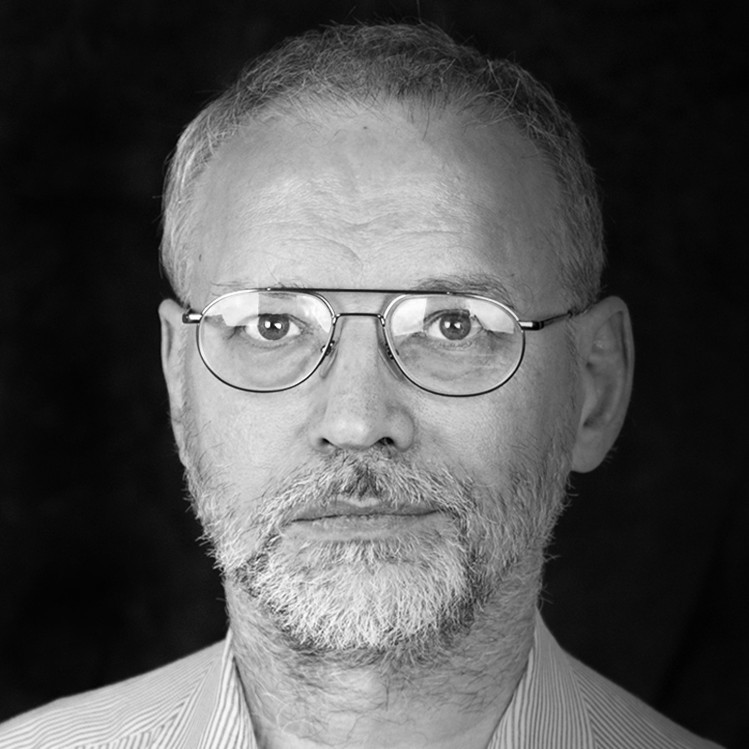
Dr. Jakob Jung is Editor-in-Chief of Security Storage and Channel Germany. He has been working in IT journalism for more than 20 years. His career includes Computer Reseller News, Heise Resale, Informationweek, Techtarget (storage and data center) and ChannelBiz. He also freelances for numerous IT publications, including Computerwoche, Channelpartner, IT-Business, Storage-Insider and ZDnet. His main topics are channel, storage, security, data center, ERP and CRM.
Contact via Mail: jakob.jung@security-storage-und-channel-germany.de