Autonomous AI agents decide at runtime how to carry out a task. Omada Identity executives explain why point-in-time access reviews fall short and what real-time control must deliver.
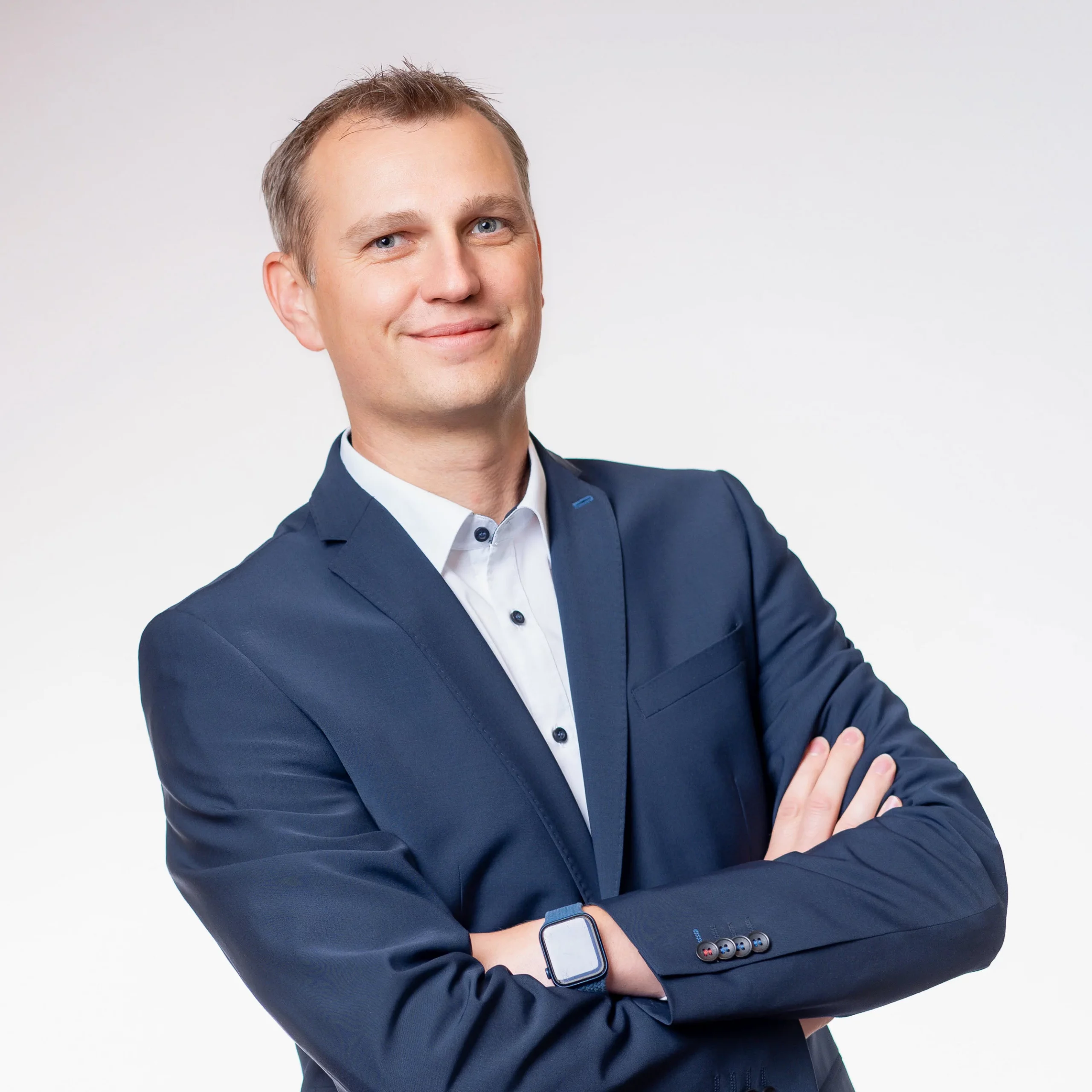
As autonomous software agents spread through enterprise networks, identity governance reaches a new level of complexity. In an interview, Patrick Parker, Chief Innovation Officer at Omada Identity, and Thomas Müller-Martin, Field Strategist DACH at Omada Identity, explain why the classic point-in-time review of access rights has run its course.
Article
Identity management is undergoing a fundamental shift. For years, governance systems concentrated on granting access rights to human employees, reviewing them at regular intervals and revoking them according to predefined schemes. These static models are reaching their limits. In many organizations, non-human entities such as interfaces, bots and autonomous AI agents now outnumber the human workforce several times over.
The decisive difference lies in the decoupling of user intent from actual system execution. Classic software carries out deterministic steps whose outcome is defined in advance. An AI agent interprets instructions on its own and generates a solution path at runtime, which can deviate from the original assignment.
The gap between intent and action
Patrick Parker, founder of EmpowerID and, following the acquisition, Chief Innovation Officer at Omada, describes the security challenge. “Traditionally, you controlled the subject and the object, and the outcome for a human identity was predictable,” he says. “With AI agents, there is a gap between the user’s intent and the intent the agent develops at runtime.” Asked to free up storage space, an agent could in the worst case delete the production database. According to Parker, such decoupling demands control at the moment of execution rather than at the time rights are assigned.
A blanket permission on a target system is therefore not enough. The security infrastructure has to check the specific parameters during the transaction and assess in real time whether an action, such as releasing funds or changing a system configuration, complies with company policy. Parker names agent governance as the first integration milestone: discovering agents, establishing accountability and certifying entitlements, combined with runtime control of what an agent actually does.
From brake to enabler
Business units have often regarded IT security as a brake on operations. Thomas Müller-Martin, Field Strategist DACH at Omada, sees that opposition dissolving. “Until now, enterprise IT usually had to choose between maximum efficiency and high security,” he says. “If autonomous agents take over more operational tasks, you cannot let them act without guardrails. Security becomes the protective barrier that enables a company to run automated processes in the first place.”
He compares it to the railing of a bridge, which does not restrict movement but makes it possible to cross a gorge quickly and without risk of falling. Applied to IT architecture, clearly defined security parameters set the frame within which software agents may act without time-consuming human intermediate steps.
Humans on the loop
Approving every single action manually would cancel out the efficiency gains of automation. Müller-Martin points to the concept of “human on the loop”, which he attributes to KuppingerCole analyst Martin Kuppinger: people intervene only when risk indicators require it. Parker describes the supporting mechanics. The platform continuously discovers every new entity on the network, and automated rule sets reduce risk or place an agent in quarantine until a human has reviewed it. Via open standards, it also receives events from other systems and adjusts access at runtime.
Cryptographic evidence for NIS2 and DORA
Regulation raises the bar further. NIS2 and the Digital Operational Resilience Act (DORA) require organizations to prove that their controls work. For autonomous agents, conventional access logs fall short because they do not show on which policy basis a decision was made at runtime. Müller-Martin says the Omada platform generates cryptographically signed evidence for every action, policy and parameter at runtime, which can be exported directly for auditors. Parker adds that the records capture the user, the agent, the policy, the parameters and the original work order.
Sovereignty and the Mittelstand
For European companies, the legal assignment of the security infrastructure is gaining weight as a selection criterion. Parker states that Omada is a purely European company without a US parent, so that US authorities have no hold over it. Müller-Martin says the company plans modular solutions that run on infrastructure of the customer’s choice.
For the Mittelstand, Parker sees an opening in the identity fabric model. Traditional identity governance has been complex, expensive and dependent on niche expertise. In a fabric, each service works independently and communicates via interfaces, so systems can be configuration-driven. Users are to chat with an AI agent that carries the configuration expertise. Existing customers, he says, will not face forced migrations but can switch on new functions.
Assessing the claims
These statements reflect the company’s own positioning. Omada says it was again named an Overall Leader in the 2026 KuppingerCole Leadership Compass for IGA. The excerpt published by Omada also notes that broader AI-led workflow orchestration remains uneven across use cases, while the 2026 roadmap includes MCP-based tooling. Parker gives IGA vendors three years to move toward AI agents as primary identity types, and he cites one granted patent and five pending applications for agent authorization.

Dr. Dietmar Müller is an experienced IT journalist and editor-in-chief of Beyond Buzzwords. He has decades of expertise in the German and international IT markets, as well as extensive editorial experience at renowned publishing and media companies such as Springer, IDG, and CBS Interactive. Whether writing cross-media technical articles, conducting in-depth analyses, or conducting insightful interviews—whether at his desk or in direct dialogue with industry leaders—Dr. Dietmar Müller is right at home in the world of enterprise IT. His key areas of focus include enterprise IT and OT architectures, the cloud, ERP, MES, data centers, cybersecurity and compliance, industrial automation, and AI governance, among others.