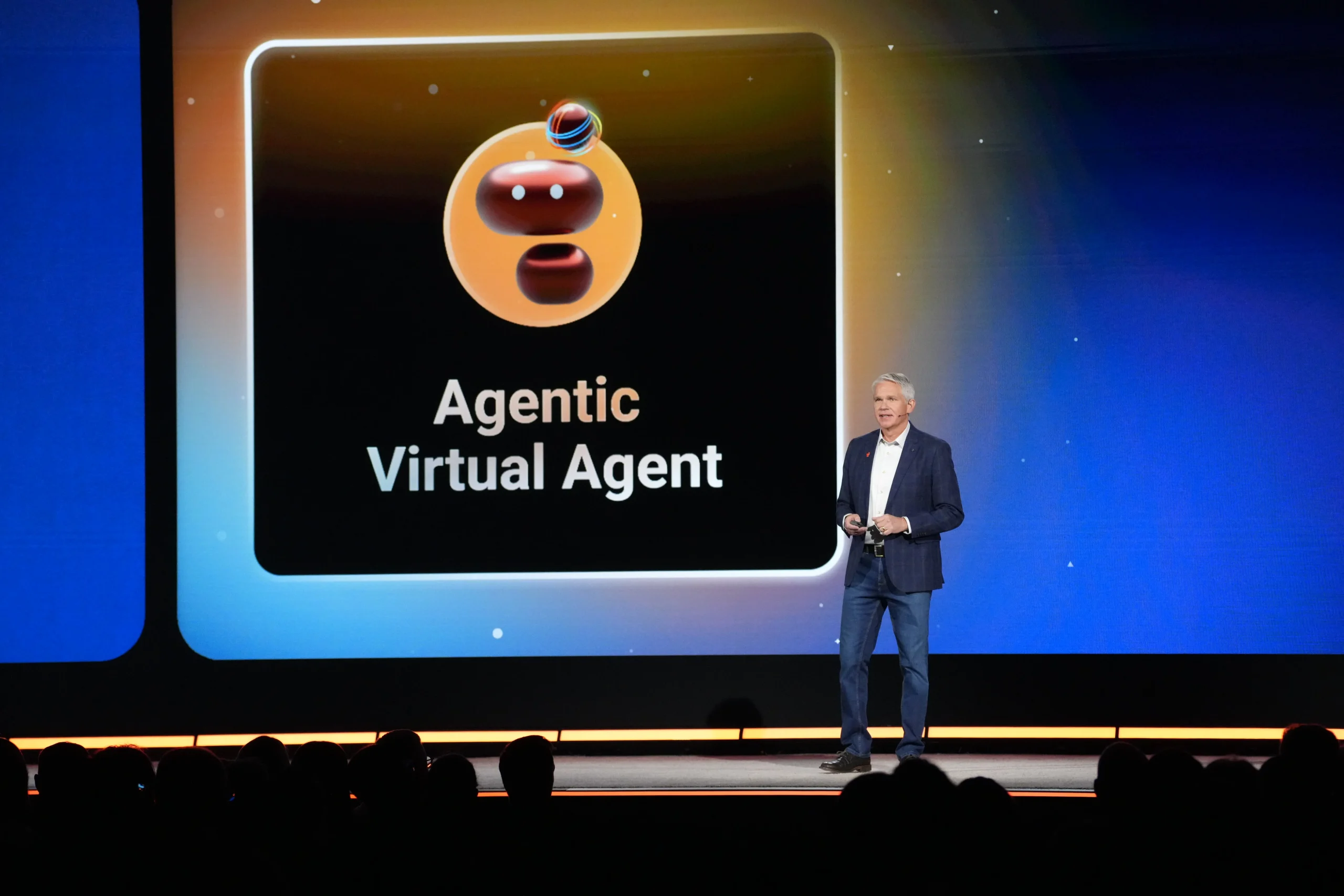
Genesys is expanding its Cloud Agentic Virtual Agent with a new language model, additional voice capabilities, and deeper connections to enterprise systems, aimed at automating more complex customer requests.
Genesys has expanded the Cloud Agentic Virtual Agent within its customer experience platform. According to the company, the update is intended to let enterprises automate more complex customer interactions faster, more reliably, and with more natural conversation flow. The additions include a new language model, additional voice capabilities, and deeper connections to enterprise systems and other AI agents.
Since the Agentic Virtual Agent became generally available in March, Genesys says customers including Global Payments, MTN South Africa, Utility Warehouse, UOL, and Charles Stuart University have adopted the solution. The company reports annual savings in the double-digit millions for some customers, along with an increase in Net Promoter Score of more than 70 points.
A New Model for More Reliable Automation
With the Large Action Model APT-2 from Scaled Cognition, Genesys is expanding the reasoning layer behind the Agentic Virtual Agent. According to the company, the model is intended to improve reasoning accuracy, factual grounding, and reliable task execution. It supports larger agent specifications, longer and more complex workflows, faster response times, and improved performance across languages.
New Voice Capabilities
The Agentic Virtual Agent also gains new voice features. End-of-turn detection is meant to recognize when a customer has finished a thought, making conversations flow more smoothly with fewer awkward pauses or interruptions. Contextual tuning automatically adjusts terminology, tone, and speaking style to match a given company, its brand, and the context of the interaction. Through new integrations with ElevenLabs for voice generation and Deepgram for speech recognition, Genesys is also expanding the range of available voice technologies, while governance and control functions within Genesys Cloud remain in place, the company says.
Development and System Connectivity
For building Agentic Virtual Agent experiences, Genesys relies on a specification-driven approach: teams can describe desired customer outcomes based on existing documentation, while AI helps translate those requirements into deployable configurations. According to the company, development teams can incorporate tools such as Claude Code from Anthropic, OpenAI Codex, Cursor, and Kiro. Genesys is also introducing a new AI-assisted authoring tool designed to analyze how virtual agents are built and suggest ways to improve outcomes.
Building on the recent acquisition of Pinkfish, Genesys is adding more than 500 enterprise system integrations and access to over 25,000 MCP-compatible tools for the Agentic Virtual Agent. Through the Model Context Protocol (MCP) and Agent2Agent (A2A) interoperability, the Agentic Virtual Agent is designed to securely work with CRM, ERP, IT service management, and other business applications, as well as with specialized AI agents on platforms such as Salesforce and ServiceNow, delegating tasks as needed. The Agentic Virtual Agent is also available through digital channels such as WhatsApp.
Customer Examples
Genesys cites Brazilian fashion retailer Riachuelo, which replaced its previous chatbot with the Agentic Virtual Agent, as an example. According to the company, customer retention rose from 30 to 84 percent, CSAT improved by 60 points within the first year, and productivity increased by more than 400 percent without adding staff. Zeppelin Rental GmbH, a provider of rental and construction services, also uses the solution, allowing customers to describe their requirements in natural language rather than searching product catalogs.
“Enterprise AI is entering a new phase, one defined primarily by what it delivers for customers,” said Mike Szilagyi, Senior Vice President and Head of Product at Genesys, in the announcement.
Availability
According to Genesys, the APT-2 model, new development tools, and the Deepgram integration are available now. The ElevenLabs integration is expected in the company’s third fiscal quarter (August 1 through October 31, 2026). Native voice enhancements, A2A interoperability, and the AI-assisted authoring tool are expected to become generally available in the fourth fiscal quarter (November 1, 2026 through January 31, 2027).

Dr. Jakob Jung is Editor-in-Chief of Security Storage and Channel Germany. He has been working in IT journalism for more than 20 years. His career includes Computer Reseller News, Heise Resale, Informationweek, Techtarget (storage and data center) and ChannelBiz. He also freelances for numerous IT publications, including Computerwoche, Channelpartner, IT-Business, Storage-Insider and ZDnet. His main topics are channel, storage, security, data center, ERP and CRM.
Contact via Mail: jakob.jung@security-storage-und-channel-germany.de
My specific setup struggles with integrating these new integrations. I found that the transition required significant manual configuration. This limitation affects my workflow considerably.