
As a full-service IT provider, Sigmavista relies on an integrated platform strategy. In an interview, CISO Jürgen Weiss explains how the partnership with Acronis increases operational efficiency, addresses the shortage of skilled labor in SMEs, and guarantees top standards for data sovereignty and AI security.
A consolidated platform instead of isolated point solutions: The strategic partnership between Sigmavista IT Consulting GmbH and Acronis demonstrates how modern Managed Service Providers (MSPs) can efficiently secure complex IT infrastructures. Jürgen Weiss, CISO AI Strategy & Coordination and Head of Managed Operations at Sigmavista, spoke with Carolina Heyder at Acronis Accelerate in Sofia about operational synergies, AI-driven threat landscapes in the DACH region, and European data sovereignty.
Interview
SSCG: Mr. Weiss, Sigmavista has been an Acronis partner since 2012. How did the cooperation come about, and what strategic considerations were key for you as CISO?
Weiss: I have been CISO and Head of Managed Operations at Sigmavista for about a year and a half. A year and a half ago, I brought my cybersecurity company into Sigmavista. I come from the MSSP sector, where I built up a successful company in Austria over seven years. Strategically, it was clear to us that IT operations as a pure MSP would no longer work as they used to. We positioned Sigmavista as a full-service provider focusing on data centers, security, and AI services, combining our resources.
SSCG: Which specific Acronis solutions does Sigmavista integrate into its managed services offering? How does this fit into your existing security and backup portfolio?
Weiss: We operate the Acronis Data Center at our location in Traun, Upper Austria, and are the first Acronis Cyber Frame provider. In the EDA area, we were the first cybersecurity partner in Europe to provide managed services for endpoints. Sigmavista comes from infrastructure operations with patching and backup. With Acronis’ strategy of bringing everything onto a single platform—rather than piecing together five different platforms—this was the most efficient way for us to automate services and increase quality of service. This represents a clear commitment to joint growth with Acronis.
SSCG: What measurable added value do your customers expect from this partnership—for instance regarding resilience, recovery times, or ransomware protection?
Weiss: With Acronis Cyber Frame and the Acronis platform, we have a 360-degree view of the entire infrastructure. We can evaluate alerts and vulnerabilities faster and reduce false positives using AI. For customers, this means lower error rates, fewer false positives to coordinate, and less need for an internal IT department, especially in the SME sector. Vulnerabilities can be resolved on the fly from the platform instead of waiting weeks.
SSCG: From your role as Head of Managed Operations: What security requirements had to be met for you to choose Acronis as a partner over other providers on the market?
Weiss: Acronis can cover 99.9 percent of everything. Naturally, in the security domain, when moving toward SIEM solutions or other endpoint protection, there are other vendor options. But you no longer carry around a patchwork portfolio offering ten vendors for a single need; instead, you focus on highly competent, innovative partners that provide (almost) everything from a single source.
SSCG: How does this partnership specifically change your daily operations—such as in monitoring, incident response, or automating backup and recovery workflows?
Weiss: Everything in the service desk domain becomes much more automated and simpler, making it easier to maintain SLAs. Then there are the subject matter experts, whether for IT operations, patch management, or security topics. For us, the service desk, service delivery, and SOC team merge into a single team. This enables much more efficient work. Acronis is very easy to train and onboard new employees with because it is so intuitive. It is one platform, and all information is available right there—I don’t have to fetch it elsewhere and re-import it.
SSCG: How do you assess the current situation of your customers in the DACH region, and to what extent does the Acronis partnership address these challenges?
Weiss: In the Austrian SME sector, we mainly see a shortage of skilled labor and increasing cost and budget discussions at the C-level. Many companies with 150 to 300 employees are questioning in-house IT operations and leaning toward managed services. A key argument is data sovereignty: We place great importance on compliance with EU regulations like the Cyber Resilience Act, AI Act, and NIS2, relying on a European product with local data centers where customers can hold backups in market- or country-specific locations, such as France.
SSCG: How exactly does Acronis Cyber Frame allow MSPs to maintain control over their infrastructure, increase margins, and deliver IaaS according to their own visions?
Weiss: Cyber Frame gives us a 360-degree view of the infrastructure: patching, endpoints, alerts, and vulnerabilities converge on a single platform instead of isolated solutions. This allows us to fix vulnerabilities “on the run,” reduce false positives with AI, and automate Level 1 and Level 2 processes—lowering resource usage, boosting efficiency, and building the foundation to run infrastructure services profitably with clear SLAs.
SSCG: What about market trends in cybersecurity?
Weiss: We are seeing the first AI-driven ransomware incidents where encryption processes continue running even after disconnecting from the command-and-control server and evolve heuristically, making reverse engineering significantly harder. In cooperation with Acronis’ Threat Research Unit, we try to stay one step ahead and advise industrial clients early on protecting their intellectual property and linking compliance, IT operations, and security. At the same time, we set clear boundaries: Vendors with OpenAI partnerships undergo a risk assessment; in case of doubt, we do not integrate them and rely on guardrails and “human in the loop” in our own AI processes.
SSCG: You advertise with “Full-Service IT Provider – The Big Picture in Mind.” Could you briefly explain your approach?
Weiss: Our unique selling point is that we correctly identified the domains where future business will happen: specifically, compact managed services for data center, security, and AI. We are a full-service IT provider with corresponding expertise and keep the big picture in mind. This makes us a credible service provider of a type and scale that barely exists elsewhere. Something like us is usually only found in larger, internationally active enterprises. We are a hidden champion in Austria.
SSCG: You are also Head of Strategy & Consulting at Aqento. Do you also cooperate with Acronis in that field?
Weiss: Correct. As a brand, Aqento is part of Sigmavista and focuses on sovereign AI from our own GDPR-compliant data center in Austria. We build consulting and success management there to accompany AI use cases long-term, define guardrails, and check return on investment. Organizationally, we separate security (Ares Managed Operations, SOC in Romania) and AI (Aqento), but in the SOC domain, we also offer partner services like MDR for Acronis partners and customers to prevent conflicts of interest and pool expertise targetedly. We enable companies to become more independent of cloud providers.
SSCG: What next steps are planned in the cooperation with Acronis, and where do you see Sigmavista and this partnership in the coming years?
Weiss: We will intensify our cooperation. We have many tasks in the field of agentic AI on the customer side. These need to be controlled and monitored, including collecting log files. We deliver significant input from our daily operations to Acronis as well, and together we will create real added value for our customers.
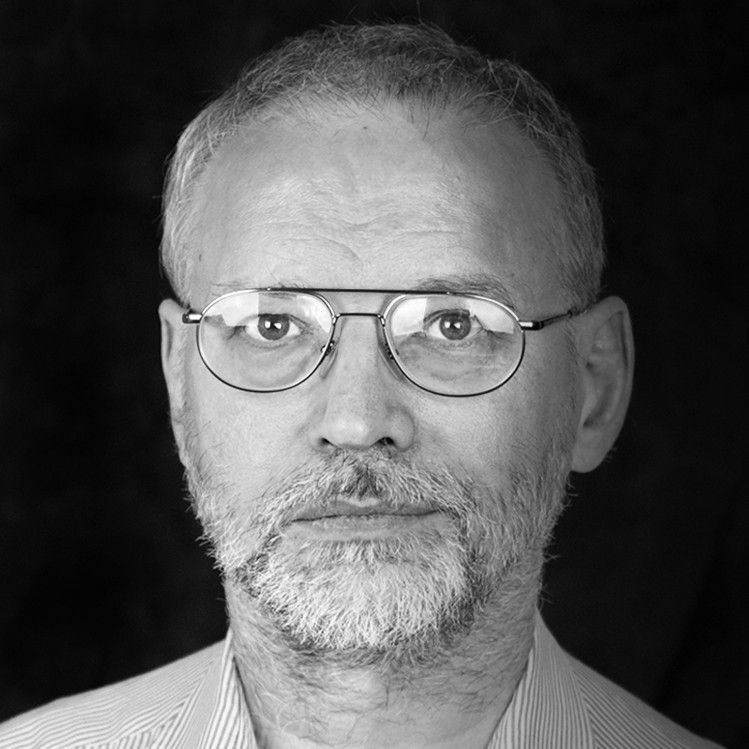
Dr. Jakob Jung is Editor-in-Chief of Security Storage and Channel Germany. He has been working in IT journalism for more than 20 years. His career includes Computer Reseller News, Heise Resale, Informationweek, Techtarget (storage and data center) and ChannelBiz. He also freelances for numerous IT publications, including Computerwoche, Channelpartner, IT-Business, Storage-Insider and ZDnet. His main topics are channel, storage, security, data center, ERP and CRM.
Contact via Mail: jakob.jung@security-storage-und-channel-germany.de