
KnowBe4 extends its security approach to the entire workforce, including AI agents. CISO Advisor Martin Krämer explains oversight, behaviour-based risk measurement and the opportunities for channel partners.
KnowBe4 wants to protect the entire workforce, and that workforce now includes AI agents. In an interview on 27 October 2026, Dr. Martin J. Krämer, CISO Advisor at KnowBe4, explained why humans must stay in control of autonomous software, how the company moves from training to measuring behaviour, and where channel partners can find new business.
The security vendor, long known for security awareness training, is repositioning itself. According to Krämer, the new name stands for protecting the entire workforce, which in reality consists of AI agents as much as of people. The principle behind it: humans should rule. AI agents can hallucinate and often handle sensitive data, so security awareness remains important.
Managing AI agents like new hires
Krämer compares an AI agent to an apprentice. Its results are often good enough, but someone has to correct bad output. How do you manage such an AI worker? His answer is effective control. The industry mostly debates this at the technology layer, whereas KnowBe4 wants humans to stay in charge and to keep real oversight of agents. The underlying model remains a black box, whether the agent works in CRM or supply chain systems.
Developing skills for oversight and control of large language models is, in his view, a new layer of technology that has to be monitored itself. Things become more critical at runtime. Agents can disregard their job profile, and a supervisor cannot argue with them but must anticipate their behaviour. If necessary, the plug is pulled, because black boxes get shut down. Monitoring agent behaviour in turn requires AI for supervision.
This leads back to governance: processes, regular revisions and the supervisor’s prerogative. Supervisors have to learn to recognise bad behaviour, for example with test catalogues that cover problems such as prompt injection. On the technical side, Krämer names runtime assurance, test environments and security checkpoints. He sees the regulatory framework on the same line. The EU AI Act defines effective human oversight, which calls for better risk assessment and approval processes. He compares it with automated systems for airline pilots: the same effective oversight applies, only in the context of AI risk or harm. Krämer regards this as a core competence of KnowBe4’s training business and an essential requirement.
From training to behaviour measurement
Classic training remains part of the approach. The first pillar of the platform is training and simulation, which KnowBe4 has offered for 15 years. Voice phishing and AI-generated deepfakes require AI assistance, and content has to be delivered in small portions. When someone joins a department, their risk exposure changes, and the training should change automatically with it. Each employee has an individual security profile fed by more than 350 triggers that raise or lower the risk. The aim is that awareness programmes are not ticked off as a compulsory exercise but adapt to each person’s actual risk, which should also reduce resistance among staff.
The second pillar covers attacks via email and other messaging channels within the organisation, inbound and outbound, and stems from the acquisition of Egress. The third pillar is in tech preview, with general availability planned for next year. For managed security service providers (MSSPs) it is not significantly different from today, says Krämer, but it offers many opportunities for channel partners. MSSPs can start thinking about non-human identities, and partners want to offer this as a service.
The true value lies in the combination of the three pillars and the risk engine, whose results are actionable, he argues. Resellers can use it to strengthen workforce security, upsell and cross-sell with evidence, and bundle AI security. Most organisations want guardrails. KnowBe4 also says that Microsoft recommends its email security and that it performed better than competitors in a Microsoft comparison; this is the company’s own claim.
How attackers target people
Recent cases analysed by Krämer show why this matters. According to Fortra, phishing attacks abusing remote monitoring and management tools such as AnyDesk rose by 475 percent by September 2026 compared with the whole of the previous year. Victims are lured to a fake bank website whose “live chat” downloads the remote software, giving criminals lasting access; business accounts are the main target. ESET described fake sponsorship offers that steer YouTube creators to a bogus partner portal where they hand over Google credentials. Malwarebytes documented a fake Claude Max giveaway that steals Google logins through a counterfeit browser window, complete with a countdown to create pressure.
In all three cases the attack aims at the person, not the firewall, and the tools involved are often legitimate or look genuine. That is why technical protection and trained, continuously measured behaviour have to work together, a point Krämer also makes about phishing-resistant authentication such as FIDO2 and passkeys. KnowBe4 plans a roundtable discussion on these topics in its online community and the tech preview.
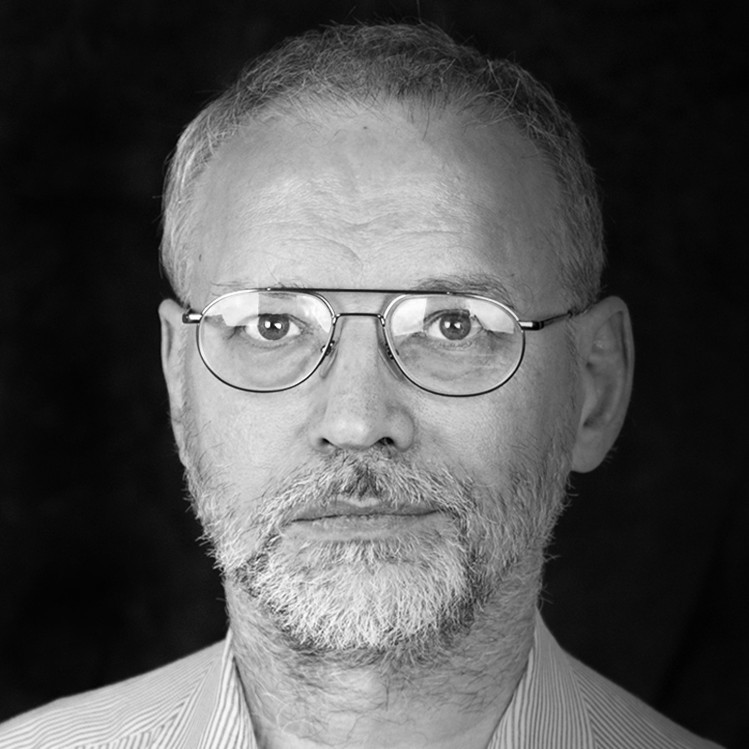
Dr. Jakob Jung is Editor-in-Chief of Security Storage and Channel Germany. He has been working in IT journalism for more than 20 years. His career includes Computer Reseller News, Heise Resale, Informationweek, Techtarget (storage and data center) and ChannelBiz. He also freelances for numerous IT publications, including Computerwoche, Channelpartner, IT-Business, Storage-Insider and ZDnet. His main topics are channel, storage, security, data center, ERP and CRM.
Contact via Mail: jakob.jung@security-storage-und-channel-germany.de
In my previous experience with automated workflows, I found that human intervention often introduces unforeseen vulnerabilities. This is a crucial distinction when managing autonomous systems.