At it-sa in Nuremberg, data security vendor Cyera met a DACH market asking how to protect data in the age of AI agents. Matthias Canisius, Area Vice President DACH at Cyera explains the strategy, the partner model and the growth plans.
Which data do we have, who has access to it, and what may they do with it? According to Cyera, these three questions dominated the conversations at its it-sa booth, where visitors showed great curiosity and the halls were well attended.
Cyera came to it-sa with a clear message: before companies can secure data or let AI agents work with it, they have to understand it. Matthias Canisius, Area Vice President DACH at Cyera described the mood at the show as curious. Visitors were looking for answers, he said, and nearly all of them brought the same three questions.
The first concerns which data an organization holds and in what quality. The second asks who can access it, including AI agents and other identities whose risks need to be understood. The third addresses what each party may do with the data, such as delete or send it. Cyera positions its platform as the answer to all three. The company describes data as the fastest-growing attack surface worldwide and names Paramount Pictures and Mercury Financial among its customers. According to Canisius, this lets companies not only protect data but also enable AI agents in a controlled way. Security leaders, in the company’s words, should be able to concentrate on helping their business use data safely in whatever way it wants, now and in the future. Its stated vision is to redefine how companies protect data and to pursue business opportunities boldly with AI-native data security posture management and data loss prevention.
Canisius named the automated capture of data without human involvement, which Cyera calls data DNA, as its main differentiator. The platform is meant to qualify even unique data in depth and to rate its sensitivity; a loan agreement, for example, would be identified as critical. He claimed that no other vendor can do this at the same depth. Classification relies on AI and proprietary large language models developed in-house, backed by verified logic and automated quality assurance. Cyera’s website cites 95 percent accuracy, an agentless design and deployment within five minutes. These figures come from the company and have not been independently verified.
On regulation, Canisius pointed to DORA and NIS 2. He sees two use cases for data transparency: compliance and the handling of personal data, including the question of who has access to it. Cyera says it delivers this quickly and precisely. He has a mixed relationship with the term data security posture management (DSPM). The approach has existed for around 20 years, he said, but offerings have not met the technical requirements; Cyera, in his view, solves it in a way that was not possible before.
On sovereignty, the company offers several deployment variants: on customers’ own cloud services, in its own cloud in Frankfurt and, soon, on Azure in Zurich. Storage is another use case Canisius finds interesting, particularly on premises. Many organizations hold a mass of redundant data, he said, and more data transparency could reduce storage costs and CO2 emissions.
In the channel, Cyera works closely with strategic global system integrators, including PwC, which is also a customer in the DACH region. Classic system houses such as SVA, NTT and Computacenter are part of the collaboration, as are local boutique partners such as Adam & Eve in Hamburg and the VAR Serviceware, both already partners with what Canisius called a very good portfolio. Distribution is currently not a topic. As a SaaS vendor, Cyera does not want too many partners.
For demand generation, the company relies on bus breakfasts, CISO roundtables and a speed-dating format in Berlin, all in close coordination with partners. A workshop on secure AI adoption in banks, focused on speed and precision, follows the next day at an AI Week in Frankfurt. Canisius summed up the security argument with an image: everyone has an engine, but how safe is it?
Cyera was founded about six years ago in Israel and is now headquartered in New York, with its EMEA headquarters in London. It employs around 1,500 people worldwide, 25 of them in DACH, and plans to double the regional team. There is no IPO yet; Canisius cited funding of around two billion. The DACH team is spread regionally across the market, and the region is the focus, while inquiries from Eastern Europe are handled opportunistically for now and are to become more strategic next year.
At it-sa, Cyera put its brand identity and its team in the foreground. Eighteen colleagues staffed a large booth shared with three partners, and Canisius likened the team to an orchestra. The quality of conversations was very high, he said, and the first day was very positive.
Looking ahead, Canisius sees AI and security meeting in three areas: protection against AI, protection with AI and the new task of protecting AI itself. The direction of travel leads to the data itself, he said: protection has to be conceived from the data outward, and it begins with transparency.
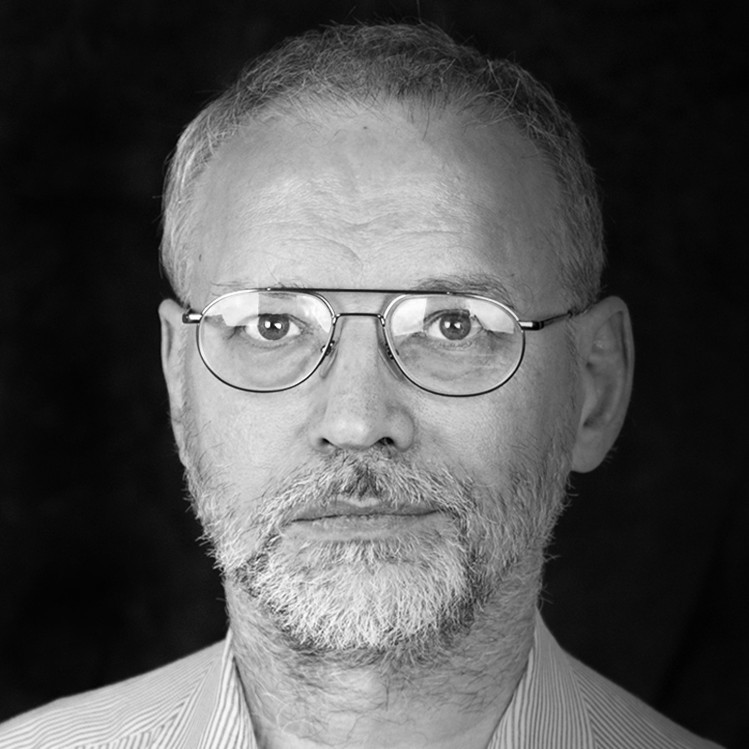
Dr. Jakob Jung is Editor-in-Chief of Security Storage and Channel Germany. He has been working in IT journalism for more than 20 years. His career includes Computer Reseller News, Heise Resale, Informationweek, Techtarget (storage and data center) and ChannelBiz. He also freelances for numerous IT publications, including Computerwoche, Channelpartner, IT-Business, Storage-Insider and ZDnet. His main topics are channel, storage, security, data center, ERP and CRM.
Contact via Mail: jakob.jung@security-storage-und-channel-germany.de