During the 2026 IT Press Tour in Boston, ExaGrid outlined its focus on backup storage solutions, customer base, and competitive approach in a market dominated by larger vendors.
ExaGrid, a company dedicated exclusively to backup storage for over 18 years, presented its business strategy and technology during the IT Press Tour in Boston in June 2026. The firm highlighted its tiered architecture and global operations amid ongoing demand for reliable data protection infrastructure.
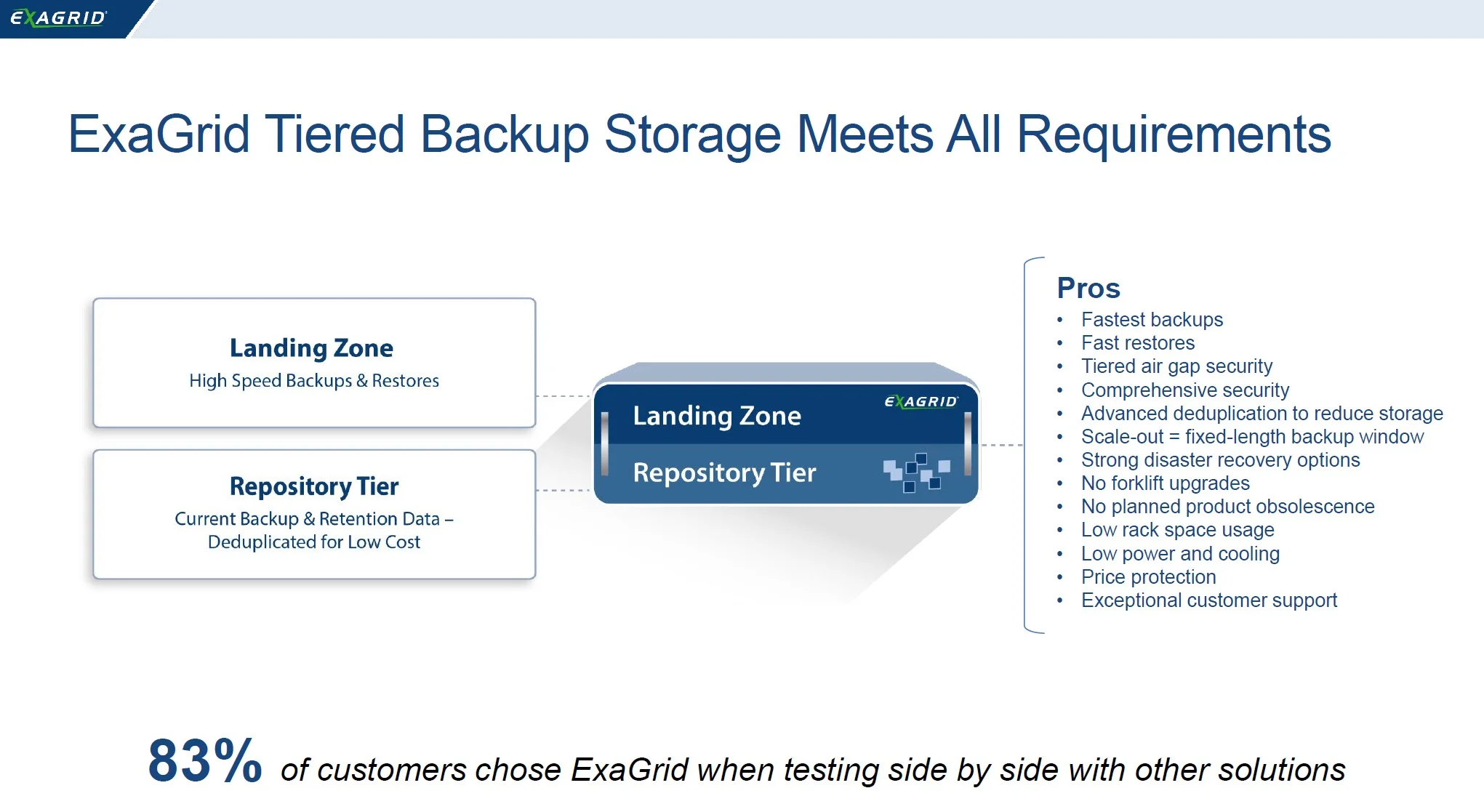
ExaGrid operates as an independent vendor in the backup storage sector, emphasizing a tiered approach that separates high-speed landing zones for recent backups from long-term retention repositories. According to the company, this design aims to address performance needs for ingest, restores, and ransomware recovery scenarios while supporting scale-out expansion.
The company reports more than 5,200 active customers installed across 108 countries, with appliances certified in over 132 nations. It maintains sales teams in 30 countries and works through resellers and distributors in more than 70. Approximately 80% of deals involve channel partners, while global systems integrators such as HCL and Kyndryl form part of its outreach to larger enterprises.
ExaGrid targets data centers in the upper mid-market through enterprise segments, typically handling environments from 50 TB to petabyte scale with multiple retention copies and secondary site replication. It supports over 25 backup applications, including Veeam, Commvault, NetBackup, Rubrik, and Cohesity, as well as direct database tools. The company does not focus on SMB customers or data residing primarily in public clouds.
In competitive contexts, ExaGrid positions its systems as replacements for primary storage used for backups or inline deduplication appliances from vendors such as Dell (Data Domain), HPE (StorOnce), and NetBackup appliances. It also encounters competition from SSD-based solutions and, in select regions, Huawei OceanProtect. Presentations indicate these scenarios represent the majority of opportunities encountered.
Company representatives noted high engagement rates when presenting on active backup storage projects, with reported win rates averaging around 74% in recent quarters and higher when proof-of-concept testing occurs. Customer retention stands at 95.6% annually, with limited losses attributed to acquisitions, business closures, or shifts to managed services rather than direct competitive displacement.
Financially, ExaGrid describes itself as cash-positive for multiple consecutive quarters, with no debt and positive P&L and EBITDA. It has received multiple industry awards in recent years for backup-related solutions and maintains a Net Promoter Score of +81.
The tiered architecture features a disk-cache landing zone for fast initial backups and restores, transitioning data to a deduplicated repository tier. This setup is intended to limit rehydration needs during restores and provide a non-network-facing air gap for security. Integration details with major backup applications were reviewed, including support for scale-out repositories and specific performance optimizations.
ExaGrid appliances are available in various HDD and SSD configurations, with scale-out systems combining compute, memory, and capacity per node. The company stresses support models with assigned senior technicians and proactive health monitoring for a significant portion of its installed base.
In the transcript of the press tour, executives discussed market dynamics, noting the dominance of a few large backup software providers and the challenges of switching applications due to proprietary data formats. They observed that on-premises data centers remain central for most enterprise backup needs, with hybrid strategies common but full migration to public cloud limited for primary production environments.
Industry observers note that backup storage decisions often arise during capacity expansions, refreshes of aging systems, or responses to performance and security concerns. ExaGrid’s focus on a single product category distinguishes it from larger infrastructure vendors.

Dr. Jakob Jung is Editor-in-Chief of Security Storage and Channel Germany. He has been working in IT journalism for more than 20 years. His career includes Computer Reseller News, Heise Resale, Informationweek, Techtarget (storage and data center) and ChannelBiz. He also freelances for numerous IT publications, including Computerwoche, Channelpartner, IT-Business, Storage-Insider and ZDnet. His main topics are channel, storage, security, data center, ERP and CRM.
Contact via Mail: jakob.jung@security-storage-und-channel-germany.de