Dropbox launches three new integrations for Claude, Claude Cowork, and Claude Code to connect cloud content with AI workflows.
Cloud storage provider Dropbox is expanding its artificial intelligence capabilities. By introducing three new connectors and plugins for Anthropic’s Claude AI applications, the company aims to optimize the connection between stored corporate content and AI-driven workflows. These integrations are designed for individual users and teams looking to utilize documents, source code, and workflows directly within the Claude environment.
In modern work environments, AI tools are playing an increasingly critical role in handling daily tasks. However, data fragmentation frequently poses a challenge in day-to-day operations: relevant context and file histories are often stored in separate systems, making direct access by AI models difficult. To bridge this technological gap, Dropbox has introduced three new extensions for the Claude portfolio. The updates include a specific connector for the Claude AI model, alongside two dedicated plugins for the applications Claude Cowork and Claude Code. This release aims to enable the platform’s approximately 700 million users to seamlessly incorporate their data assets into AI-powered workflows.
By consolidating project histories, content, and feedback structures, the cloud service serves as a centralized source of information within the AI infrastructure. This allows users to extend existing workflows to artificial intelligence without losing the coordination or context of the original project data.
The Dropbox connector for Claude allows individuals and project teams to search, view, and share documents directly from their storage directory within Claude. AI-generated responses can thus be refined based on existing corporate data and files. Relevant documents for campaigns or client projects can be previewed before being shared. A key aspect of this integration is its reversibility: newly generated AI content can be saved directly back to the cloud storage, minimizing platform switching and fragmented workflows.
In practice, an architecture firm, for example, can link design briefs, drawings, renderings, and meeting notes directly to Claude. The system automatically analyzes client feedback and generates reports for stakeholders. Once completed, the document is saved back to Dropbox, preserving the version history for the entire team and keeping it available for subsequent processing steps.
For more complex organizational tasks, the plugin for Claude Cowork was developed. This application is designed to partially automate administrative processes. The plugin structures client feedback, forwards results to external partners, or generates new drafts based on existing data. Furthermore, the system can organize files, generate secure sharing links, and create text formats such as CSV, Markdown, HTML, or JavaScript. The final results are saved directly back to the central directory to ensure immediate collaboration within the team.
A marketing agency can utilize this tool to analyze campaign briefs, creative assets, and copy drafts ahead of client meetings. Instead of manually reviewing files, the plugin filters feedback and prepares summaries. After the meeting, results can be shared directly from the application and secured in storage.
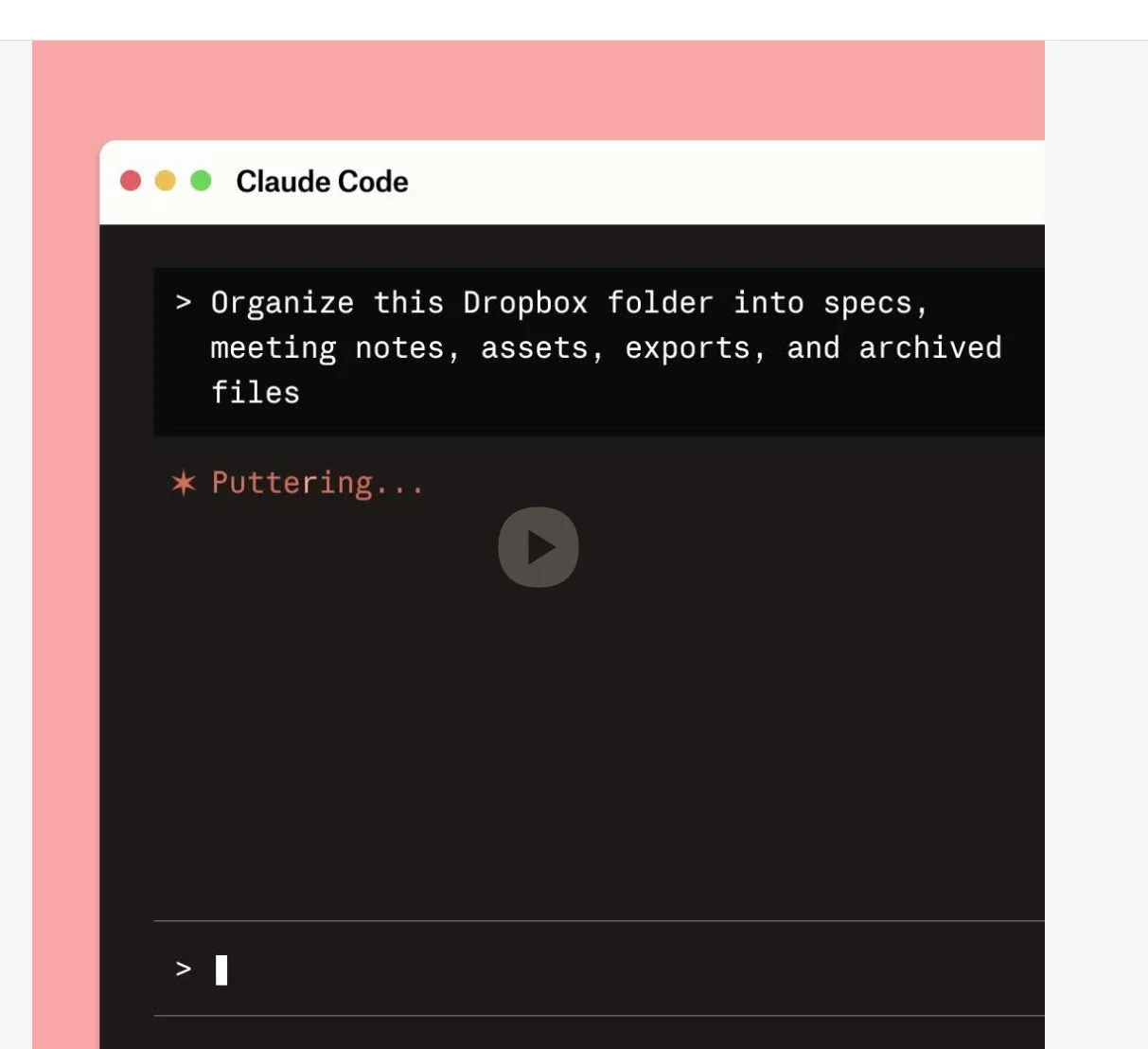
The third extension addresses the needs of software developers. The plugin for Claude Code allows technical documentation, specifications, and collateral to be used as context for programming tasks. This reduces the need to switch between development environments and document repositories. Developers can organize project folders, create decision logs in Markdown format, and document changes—all directly from their active workspace.
Because the quality of AI models depends heavily on the provided context, anchoring Claude within existing datasets is intended to ensure more precise and secure data processing. The activation of these new integrations is now available within the Claude workspace.

Dr. Jakob Jung is Editor-in-Chief of Security Storage and Channel Germany. He has been working in IT journalism for more than 20 years. His career includes Computer Reseller News, Heise Resale, Informationweek, Techtarget (storage and data center) and ChannelBiz. He also freelances for numerous IT publications, including Computerwoche, Channelpartner, IT-Business, Storage-Insider and ZDnet. His main topics are channel, storage, security, data center, ERP and CRM.
Contact via Mail: jakob.jung@security-storage-und-channel-germany.de