Mice, birds, and occasionally something worse — outdoor cats bring home whatever they find outside. We show how to protect your home, redirect the hunting drive, and use smart technology to stop the deliveries at the door.
Anyone who keeps an outdoor cat knows the drill: the feline rarely comes home empty-handed. Mice, birds, lizards — whatever gets caught outside tends to end up inside sooner or later. That’s not a sign of poor training; it’s pure instinct. Cats are born hunters, and no amount of care fully switches that drive off. What can be managed, however, is how much of the catch actually makes it into your home.
The risks go beyond squeamishness. Prey animals can carry bacteria, viruses, and parasites. In Bavaria, two men died in the summer of 2025 after contracting the rare Borna virus, transmitted by shrews — an extreme case that illustrates how seriously the hygiene question around wildlife contact should be taken. Fleas, ticks, and worms hitching a ride on prey can spread quickly through a household, affecting both humans and animals. And before you even think about parasites: a living rodent hiding in your home and gnawing on cables can, in the worst case, start a fire.
Act Fast, Dispose Safely
When the cat presents her prize, speed matters. Put on rubber gloves, double-bag the animal, dispose of it in a sealed outdoor bin — and wash your hands thoroughly afterward. It sounds obvious, but it’s easily forgotten in the moment. Then disinfect the spot with a pet-safe cleaner or lightly diluted bleach. That removes not just bacteria but also odors that might tempt the cat to “deliver” in the same spot again.
Make the Garden Less Appealing
Fewer hunting opportunities outside mean fewer trophies inside. Position bird feeders out of the cat’s reach or remove them entirely, build secure enclosures for small pets, and always clean up kitchen scraps and pet food — because what attracts rodents also attracts the cat. Less temptation in the yard quite simply equals fewer successful hunts.
Redirect the Hunting Drive — Indoor Play as a Smart Alternative
The hunting instinct can’t be switched off, but it can be redirected. Just 5 to 10 minutes of interactive daily play with feather wands or toy mice can, according to one study, reduce the number of prey animals brought home by around 25 percent. A cat that has already “hunted” indoors is simply less ambitious outside. It costs little time and works surprisingly well.
Manage Outdoor Time and Use a Bell
Cats hunt most effectively at dusk and just after sunrise — those are exactly the times an outdoor cat should stay inside. Sticking to this consistently takes away the most productive hunting hours. A collar with a safety release and a small bell also helps: research shows that the jingling reduces hunting success by about 50 percent, because birds and other animals get an earlier warning.
Catio: The Best of Both Worlds
For a more permanent solution, the catio concept is hard to beat. A catio — an enclosed outdoor space attached to the house or freestanding in the garden — lets the cat enjoy fresh air, sunlight, and outdoor stimulation without actually being able to hunt. At the same time, the cat is protected from cars, predators, and poisoned baits. A bigger investment upfront, but a sustainable one for both cat and owner.
Smart Technology as a Last Line of Defense
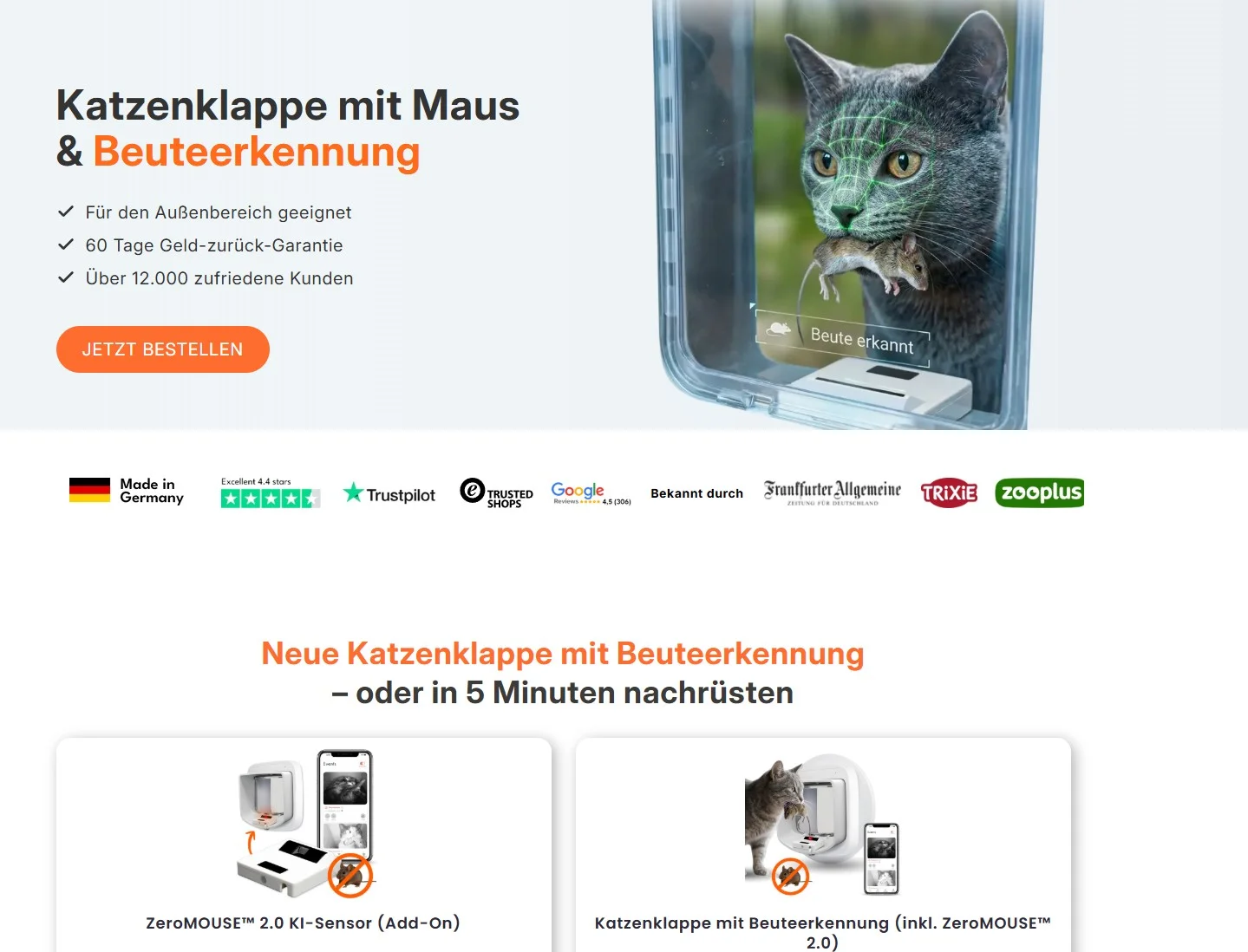
Anyone who already has a microchip cat flap can upgrade it with an AI-powered device like ZeroMOUSE™. A built-in camera detects whether the cat is carrying prey in its mouth — with a detection rate of over 99 percent — and instantly locks the flap. The system is splash-proof, installs in 5 to 10 minutes, and is compatible with all tunnel-style microchip cat flaps. Photos go straight to the app, so there’s no more wondering in the morning what the night brought in.
Cat trainer Miriam Petker, known from the German TV show hundkatzemaus, tested the system herself — and was convinced after initial skepticism: less stress, far fewer check-ins, and even her particularly clever cat Aurora was stopped after a small camera adjustment. Her verdict: a small upgrade with a big impact.
Grooming, Vaccinations, Parasite Control
Regular brushing removes not just loose fur but also dirt and external parasites from the cat’s coat — stopping them from landing in your home. Even more important is consistent parasite protection: flea and tick treatments plus regular deworming (vets recommend every three months for active outdoor cats) protect both cat and household. Vaccinations — especially against rabies and other diseases transmissible by wildlife — should also always be kept current.
Secure Trash and Compost
An often-overlooked point: open trash and compost bins attract rodents, which then attract the cat. Bins with tight-fitting lids and cat-proof storage break this cycle — and prevent inquisitive cats from rummaging in the compost themselves, where moldy material can be toxic to pets.
When to Call in the Professionals
Sometimes personal measures aren’t enough. If a mouse has hidden somewhere in the house, scratching sounds are coming from the walls, or fleas suddenly appear after a wildlife incident, don’t hesitate to call professional pest control or wildlife removal experts. They’ll ensure thorough disinfection and seal possible entry points — a worthwhile investment when health and domestic peace are at stake.
Conclusion: Prevention Pays Off
The good news is that a combination of targeted behavioral management, thoughtful garden design, and — where needed — smart technology can drastically reduce the number of unwanted trophies. The cat doesn’t have to be restricted. She gets outdoor access, stimulation, and freedom — just without a transit depot in the living room. And in the end, that’s the better deal for everyone involved.

Dr. Jakob Jung is Editor-in-Chief of Security Storage and Channel Germany. He has been working in IT journalism for more than 20 years. His career includes Computer Reseller News, Heise Resale, Informationweek, Techtarget (storage and data center) and ChannelBiz. He also freelances for numerous IT publications, including Computerwoche, Channelpartner, IT-Business, Storage-Insider and ZDnet. His main topics are channel, storage, security, data center, ERP and CRM.
Contact via Mail: jakob.jung@security-storage-und-channel-germany.de