As Windows 11 migrations loom and ransomware threats grow, German IT service provider NetPlans is deepening its partnership with endpoint specialist IGEL — betting that the real value lies in the operating system, not the hardware.
In the heart of Germany’s IT sector, a notable shift is underway. NetPlans, the IT service provider with 440 employees headquartered in Ettlingen near Karlsruhe and 15 locations across Germany and Switzerland, is deepening its partnership with endpoint specialist IGEL — with clear strategic intent.
Daniel Müller, System Engineer at NetPlans and with the company for three years, knows the subject from two perspectives: before joining NetPlans, he was himself a customer of the company. Around 20 employees at NetPlans now hold IGEL expertise, underscoring the depth of the engagement.
The foundation of the collaboration remains stable, even as the market has changed. “IGEL has withdrawn from pure hardware,” Müller explains. “Volume is significantly lower — but the software’s share of revenue is more stable than ever.” This sober assessment points to a structural shift: thin client hardware is receding into the background, while the operating system and management ecosystem move to the fore. This is precisely where IGEL positions itself with OS 12.
Loyal Existing Customers, New Arguments
According to Müller, the situation is marked by high customer loyalty, particularly in the healthcare and social services sectors. Organizations that have run IGEL thin clients for years credit the low administrative effort and the reliability of the endpoint devices. “24/7 operation in these environments isn’t optional — it’s mandatory,” Müller says. Adding to this is the vendor’s close integration with Citrix: many customers in the healthcare segment run Citrix-based virtual desktops and value the coordinated interplay between the two solutions.
For Müller, though, the central challenge lies in communicating the value of OS 12 beyond pure thin client operation. “Customers know IGEL as a five-year device that just runs. That’s good. But OS 12 can do more.” As an example, he cites the ability to now install the operating system on notebooks as well — a scenario that considerably broadens its scope of application.
Disaster Recovery and Ransomware: IGEL as a Safety Net
New use cases are emerging above all around operational security. In production environments where machines run on outdated Windows versions, IGEL offers the ability to decouple the endpoint device from the operating system. “A production line doesn’t stop just because the client has a problem,” Müller says, describing the principle. The solution: the process continues to run while the endpoint device is managed separately.
The argument is especially compelling in the context of ransomware. Because IGEL OS is write-protected and has no persistent local layer, it offers a natural barrier against attacks that target the endpoint. “If there’s an attack, you can simply keep working,” Müller says. For healthcare customers who keep a reserve of ready-to-use devices, this is particularly relevant: “In an emergency, devices can be made operational again in just a few steps — even without specialized IT expertise.”
Beyond that, IGEL is suited as a hypervisor platform through which alternative work environments can be quickly provisioned in the event of a disaster. Müller describes such transitions as “seamless,” achievable in conjunction with cloud services (“hyperscalers”).
New Customers: Windows 11 as an Entry Point
Alongside its existing customer base, Müller sees growth potential among companies that have not previously worked with IGEL. The trigger: the upcoming Windows 11 migration. “Many customers are facing a decision about replacing their hardware. That’s exactly the moment when IGEL presents itself as an alternative.” NetPlans approaches this deliberately, using proof-of-concept projects to make the value tangible.
Another factor increasingly resonating with new customers as well: IGEL’s German roots. The company manufactures in Augsburg and stands for a promise of sovereignty that is gaining weight amid growing concerns about US and Asian vendors. “This is no longer just a marketing argument,” Müller observes. “It strikes a real nerve, especially with public institutions and in the healthcare sector.”
MSP Model, Licensing Changes, and an AI Outlook
In the licensing space, NetPlans is observing increased dynamics. In particular, changes to Citrix’s licensing model are prompting customers to reexamine their previous assumptions. NetPlans is using this moment to offer tiered licensing models that combine Citrix and IGEL. Managed services (MSP) are also gaining in importance: the IGEL console enables multi-tenant administration, which is well suited to the managed-service model.
Closing out is an outlook for the second half of 2026: NetPlans plans to deepen its IGEL competencies through further certifications and to actively communicate new use cases. Concrete steps include joining the IGEL Champions Club, proximity to IGEL’s plant in Augsburg, and strengthening sales and pre-sales. Artificial intelligence is also on the agenda — though not at the endpoint, but rather at the points where processing and analysis make sense. “We’ll learn more about where the market is shifting,” Müller says. NetPlans positions itself as a partner that doesn’t just deliver technology, but actively accompanies customers through this transition.
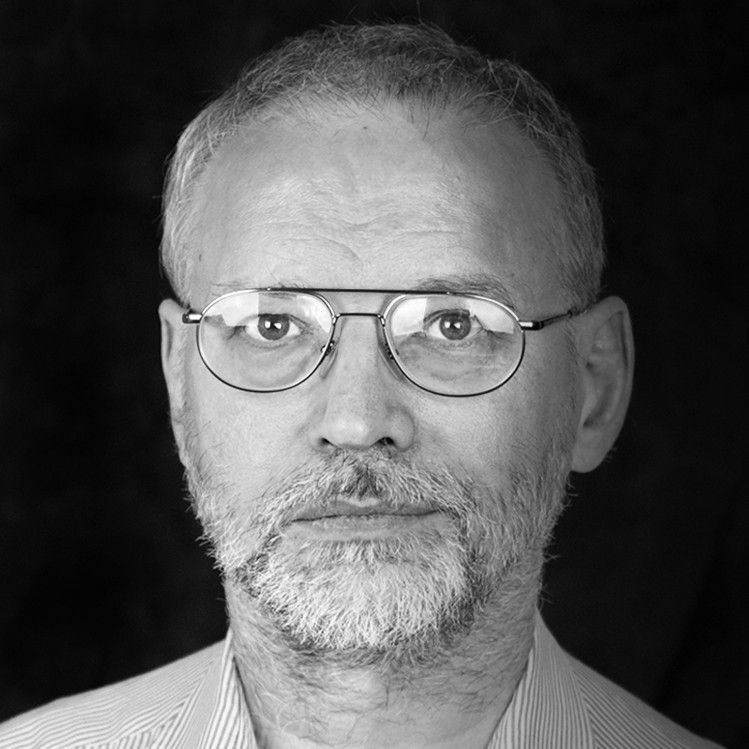
Dr. Jakob Jung is Editor-in-Chief of Security Storage and Channel Germany. He has been working in IT journalism for more than 20 years. His career includes Computer Reseller News, Heise Resale, Informationweek, Techtarget (storage and data center) and ChannelBiz. He also freelances for numerous IT publications, including Computerwoche, Channelpartner, IT-Business, Storage-Insider and ZDnet. His main topics are channel, storage, security, data center, ERP and CRM.
Contact via Mail: jakob.jung@security-storage-und-channel-germany.de