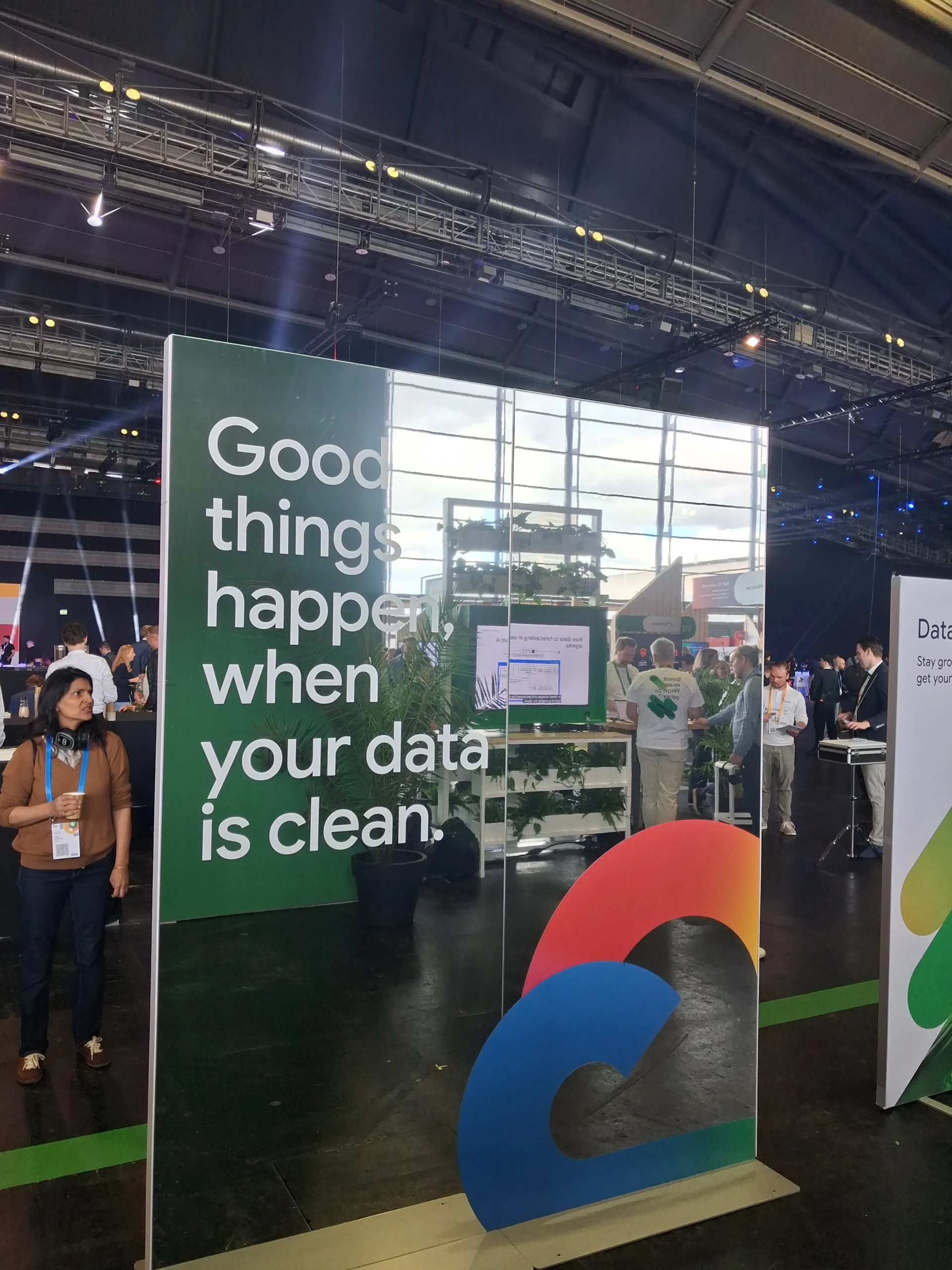
At Google Cloud Summit DACH 2026 in Frankfurt, Google Cloud executives outlined a multi-layered AI strategy built on proprietary silicon, agentic platforms, and sovereign cloud arrangements — while acknowledging ongoing infrastructure constraints in compute and power.
Google Cloud used its 2026 DACH Summit in Frankfurt to articulate a comprehensive strategy spanning custom AI chips, agentic enterprise software, and sovereign cloud infrastructure — underscoring both the scale of its capital commitments and the operational pressures it faces in meeting enterprise demand.
At the Google Cloud Summit DACH 2026, two senior executives — Dr. Wieland Holfelder, Vice President Engineering, Regional CTO Google Cloud Sovereignty & Site Lead Google Engineering Center Munich, and Karthik Narain, Chief Product Officer and Chief Business Officer of Google Cloud since October 2025 — presented a detailed picture of the company’s current AI and infrastructure positioning. The event served as a platform for Google Cloud to address enterprise customers across the DACH region on topics ranging from hardware architecture to regulatory compliance.
Central to Google Cloud’s competitive argument is what it describes as a complete, vertically integrated stack for AI workloads. Dr. Holfelder characterised Google as the only provider offering a full-stack AI advantage — spanning custom silicon, a managed cloud platform, integrated security tooling through the Wiz acquisition and Mandiant, and open multi- and hybrid cloud connectivity. The company has been building this stack for ten years, Holfelder noted, and claims that 75 percent of its customers are now actively using AI capabilities on the platform.
On the hardware side, Google Cloud’s eighth-generation TPU chips were a focal point. The company described two variants — the TPU 8T and TPU 8I — both optimised for energy efficiency and deployed across Google’s own infrastructure. These chips are designed specifically for Gemini model inference, and Google Cloud claims its inference performance surpasses Nvidia equivalents while offering lower total cost of ownership for customers. Complementing the TPU line is the Axion processor, an ARM-based chip that Google says delivers approximately 80 percent better price-performance than traditional x86 server chips.
The Gemini model family itself was discussed across several dimensions. Gemini Flash was highlighted for its total cost of ownership, described as being in a class of its own. Gemini 2.5 was referenced in the context of ongoing model development. The company also introduced references to its enterprise agent platform — branded under the “Antigravity 2.0” framework — which is positioned as an operating system for agentic AI. This platform supports managed agents running continuously in the cloud and is designed to integrate with existing enterprise workflows.
A product called “Spark” and a forthcoming omnimodal interface were also mentioned, the latter described as enabling natural multimodal input flows within applications. NotebookLM was cited as an example of a generalized-layer product that can handle diverse workloads.
Karthik Narain, who joined Google Cloud in October 2025, delivered a product-philosophy address that emphasised outcomes over features. He stated that Google Cloud’s products are designed to be ninety percent ready out of the box, with the remaining ten percent available for customer customisation. Narain drew a direct parallel between Google Cloud’s position in the AI era and the foundational role Kubernetes played across the cloud industry, describing Google Cloud’s infrastructure as designed for “planet scale” workloads.
He also addressed the economic dimension of Google Cloud’s AI push with unusual directness. He described the current infrastructure situation as “miserable,” citing acute pressure from memory pricing and an imbalance between demand and available compute supply. To address this, Google Cloud is pursuing several measures: deploying GPU capacity within partner data centres, a joint venture with Blackstone, and the acquisition of Intersect Power to secure electricity generation for data centre operations. Google Cloud’s total capital commitment for this year stands at $175 billion, with $80 billion announced in a single week. Narain declined to make long-term supply predictions, stating plainly that Google intends to watch how conditions develop.
Google Cloud currently ranks third among global cloud providers by revenue but is growing faster than its peers, according to Narain’s characterisation. He cited the cloud segment as a $300 billion total addressable market and positioned Google Cloud’s current investments as preparation for continued revenue expansion.
On data and analytics, Google Cloud highlighted its lakehouse architecture as a cross-cloud, open solution capable of accessing data across providers — a positioning that aligns with enterprise risk-distribution strategies. The platform also incorporates security capabilities derived from the Wiz acquisition, specifically the ability to surface hidden security risks in complex cloud environments.
A significant portion of the event addressed sovereign cloud. Google Cloud has been building sovereign cloud capabilities for eight years, according to Holfelder, enabling customers to deploy AI on regulated infrastructure. The primary partnership in the DACH region is with Thales, which covers both France and Germany. Thales operates two geographic regions in this arrangement, providing mutual recovery support between them. The sovereign cloud offering is structured around three tiers: a data boundary tier, a dedicated cloud tier (operated in partnership with Thales and its Source subsidiary, still in preview), and a Distributed Cloud tier that supports fully air-gapped deployments. This last tier is used by organisations including the Bundeswehr, NATO, and the British and Australian intelligence services. Identity management within the sovereign configuration is handled by Thales.
A concrete commercial signal came in the form of Bosch’s procurement of 120,000 licences — a figure cited without further elaboration but indicating substantial enterprise uptake within the DACH region.
Narain closed with a vision of what he called an “intelligence continuum”: an architecture in which all Google products — from the consumer Gemini app to enterprise search to cloud infrastructure — are connected by a unified intelligence layer capable of multimodal input and deep domain understanding. In his framing, the AI era transforms applications from software interfaces into digital experiences driven by continuous intelligence.
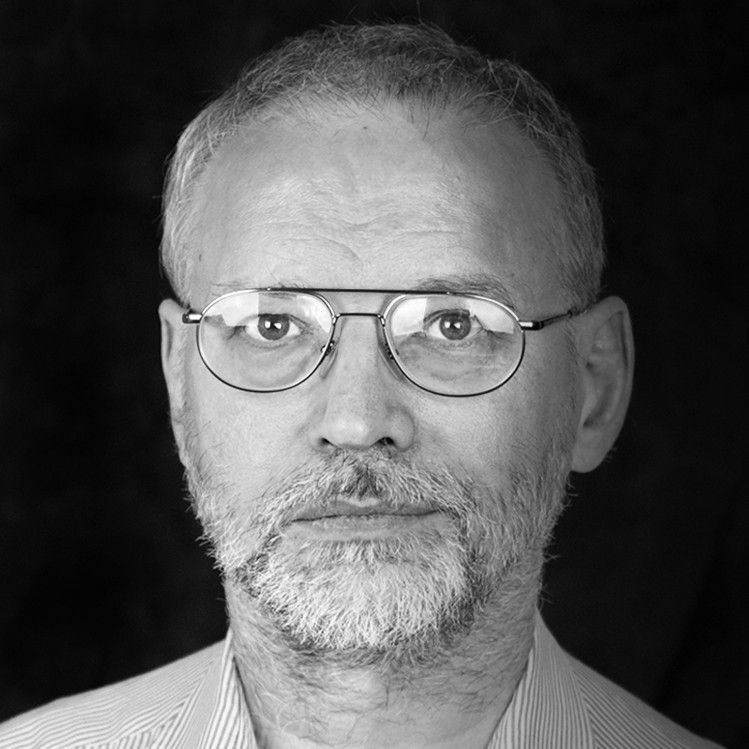
Dr. Jakob Jung is Editor-in-Chief of Security Storage and Channel Germany. He has been working in IT journalism for more than 20 years. His career includes Computer Reseller News, Heise Resale, Informationweek, Techtarget (storage and data center) and ChannelBiz. He also freelances for numerous IT publications, including Computerwoche, Channelpartner, IT-Business, Storage-Insider and ZDnet. His main topics are channel, storage, security, data center, ERP and CRM.
Contact via Mail: jakob.jung@security-storage-und-channel-germany.de