
The Global Legal Entity Identifier Foundation (GLEIF) has added three new members to its open data network. Open Supply Hub, Wikimedia Deutschland and Wikirate International are set to improve interoperability of data sources for supply chains, open knowledge and ESG reporting.
The Global Legal Entity Identifier Foundation (GLEIF) has expanded its open data network. The Basel-based foundation announced on July 16, 2026 that Open Supply Hub, Wikimedia Deutschland and Wikirate International have joined the Global Open Data Integration Network (GODIN). This brings membership in the initiative, launched in 2025, to eleven organizations. According to GLEIF, the expansion comes as organizations increasingly need to connect data across different sources, jurisdictions and systems to support compliance and operations, while valuable information is often fragmented and siloed.
GODIN aims to improve connectivity between open data ecosystems. Central to the approach is embedding the Legal Entity Identifier (LEI) across different open data sources. The LEI is a 20-character, alphanumeric code based on the ISO 17442 standard that enables unique identification of organizations worldwide. According to GLEIF, this is intended to allow consistent, reliable linking of information about organizations across systems and jurisdictions.
With the three new members, GLEIF states that GODIN’s practical application now extends to supply chain management, open knowledge, and sustainability and ESG reporting. Open Supply Hub is a non-profit platform that, together with its users, has mapped more than 2.5 million production locations worldwide, according to the organization, showing where global production takes place and which parties are connected to each location.
Wikimedia Deutschland contributes its expertise around Wikidata. The database serves as a structured data source for Wikipedia and thousands of external applications and contains, according to the organization, more than 120 million data entries. Wikirate International operates an open data platform that enables civil society organizations worldwide to collect, share and compare data on corporate social and environmental performance.
GLEIF CEO Alexandre Kech said open data is most valuable when it can be connected. He stated that welcoming three new members demonstrates a shared commitment to making data more accessible and useful, adding that it also reinforces the growing relevance of the Global LEI System beyond financial services.
The new members also commented on the move. Natalie Grillon, CEO of Open Supply Hub, said every production location profile in the organization’s database becomes more useful once it is linked to other trusted sources of information, adding that joining GODIN allows the platform to plug into a shared system of identifiers.
Alan Ang, Senior Partner Manager at Wikimedia Deutschland, pointed to the growing value of open knowledge as it is connected and reused across domains. Vasiliki Gkatziaki, Director of Data and Engineering at Wikirate, said the organization joined GODIN to advance interoperability, accessibility and usability of open data for civil society, advocates and the public.
Open Supply Hub, Wikidata and Wikirate join existing GODIN members Anti-Corruption Data Collective, Data and Research Center (DARC), Global Energy Monitor, Global Media Registry, Open Data Services, Open Ownership and Open Sanctions. According to GLEIF, membership is open to organizations that publish open data or establish open data standards, including governmental bodies, non-governmental organizations, non-profit entities, academic institutions and private organizations with public-facing data initiatives.
GLEIF was established in 2014 by the Financial Stability Board and, according to the organization, employs around 60 staff from more than 20 nations. The foundation manages a network of global partners to provide the LEI and its digital counterpart, the verifiable LEI (vLEI), and makes the full global LEI database available online free of charge under an open data license.
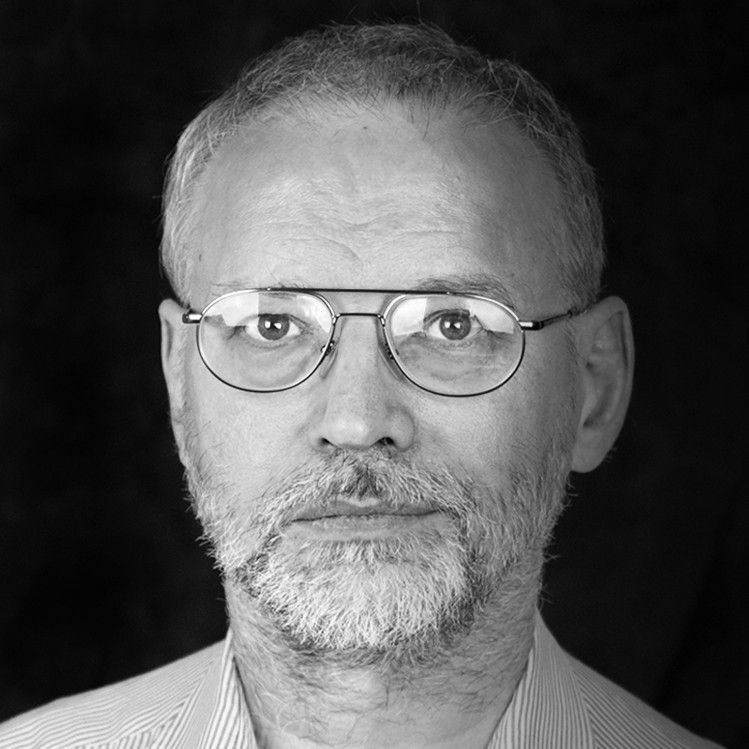
Dr. Jakob Jung is Editor-in-Chief of Security Storage and Channel Germany. He has been working in IT journalism for more than 20 years. His career includes Computer Reseller News, Heise Resale, Informationweek, Techtarget (storage and data center) and ChannelBiz. He also freelances for numerous IT publications, including Computerwoche, Channelpartner, IT-Business, Storage-Insider and ZDnet. His main topics are channel, storage, security, data center, ERP and CRM.
Contact via Mail: jakob.jung@security-storage-und-channel-germany.de