
Henning Rahe, Partner Lead at NetApp Germany, talks about loyalty, whitespaces in the mid-market, hyperscaler alliances, and the 2025 award winners.
For the past 18 months, Henning Rahe has been responsible for NetApp Germany’s partner network. In this interview, he reflects on his first impressions, explains why trust is the most important currency in channel business, and reveals which German partners were honored at the EMEA awards ceremony.
NetApp is the market leader in German storage – but standing still is not an option for Henning Rahe. Having spent twelve years at the company, and now 18 months leading its partner network in Germany, his initial assessment is clear: the existing network is strong, loyal, and highly competent. But the appetite for more is undiminished.
“We may be market leaders in Germany, but we obviously want to continue expanding our market share,” says Rahe. The logic is straightforward: new partners open the door to new customers. And new customers are what NetApp needs most – especially in the mid-market segment.
MID-MARKET AS THE KEY GROWTH DRIVER
When it comes to whitespaces, Rahe is unambiguous: “The mid-market is the area to highlight.” While NetApp already has a strong presence in enterprise and public sector environments – where the focus is more on gaining new workloads from existing customers – the mid-market is where classical new-customer acquisition comes into play. Companies in this segment typically pick one storage technology and stick with it, which makes the first conversation strategically pivotal.
The mid-market itself is divided into three tiers: Corporate (wallet size $500K–$1M per year), Mid-Market, and SMB. The lower boundary is marked by the All-SAN Array (ASA) – a product NetApp has developed to reach smaller companies with entry prices from around €50,000. For this segment, Rahe deliberately relies on distribution and multiplication rather than direct sales resources. Three core distributors – Ingram Micro, TD Synnex, and TIM in Wiesbaden – plus Fujitsu/FSAS in a special role form the backbone. Additional distribution partners? Not on the agenda. “Our partner community isn’t asking for more distribution,” Rahe states plainly.
NO ONE-SIZE-FITS-ALL FOR RESELLERS
Those expecting NetApp to describe the ideal partner profile will be surprised. Rahe explicitly rejects this framing. “I wouldn’t look at it from the perspective of what the partner must bring to the table,” he says – meaning: the partner’s business model matters far more than product focus. Whether a pure NetApp specialist, a full-line reseller like Bechtle or SVA, a GSI with global IT responsibility, or a local mid-market partner – all have their place in the ecosystem. What matters is NetApp’s willingness to adapt to each model and help partners differentiate within their own customer segments.
This flexibility appears to pay off: according to Rahe, the vast majority of new customer wins involve partners. Co-selling is not just a buzzword – it’s everyday practice.
HYPERSCALERS: EMBRACE RATHER THAN COMPETE
One of NetApp’s sharpest strategic moves in recent years has been its hyperscaler cooperation. While other storage vendors tried to build their own cloud offerings, NetApp took a different approach early on. “We’re not going to build a NetApp cloud – we’re going to embrace this trend,” Rahe summarizes the thinking at the time. The result: NetApp is now the only storage vendor worldwide with native first-party services across all three major hyperscalers – AWS, Microsoft Azure, and Google Cloud. ONTAP, the proven operating software from the data center, is seamlessly available across all three.
The customer benefit is tangible: data can be moved flexibly between on-premises infrastructure, hyperscalers, and sovereign cloud providers – without vendor lock-in, without friction. Rahe talks about “putting roller skates under data,” which captures the essence of what the NetApp Data Platform aims to deliver: maximum freedom of choice in an increasingly volatile world.
And that freedom is becoming more important by the day. Sovereign cloud is gaining massive traction in Europe. Players such as T-Systems, the Schwarz Group, Ionos, and OVHcloud are expanding their presence in Germany. NetApp cooperates closely with these providers too – enabling consistent data management across all cloud models.
PRICING PRESSURE AND THE PARTNER ROLE
The current market situation is complex: flash storage is getting more expensive, budgets are under pressure, and customers need to re-evaluate workload decisions. This is precisely where Rahe sees partners as indispensable trusted advisors – working together with customers to figure out which data really needs to stay on expensive all-flash storage and what can sensibly be tiered to the cloud.
The Keystone consumption model is gaining relevance in this context: instead of capex investments, it allows customers to consume storage flexibly as an opex service – scalable up and down, predictable in cost. “Keystone is another important weapon here,” says Rahe. For partners, it also represents an opportunity: the path from project business toward recurring revenue and managed services is actively supported within the NetApp ecosystem.
THE PARTNER PROGRAM: EVOLUTION WITH CLEAR FOCUS
The existing program is well-received – CRN recently awarded it five stars again. Nevertheless, Rahe wants to sharpen it. Three priorities stand out: first, partners who bring new customers and workloads should be rewarded even more strongly – the “Race to NetApp” program will be expanded. Second, Keystone selling should be placed on equal footing with classic hybrid cloud sales to create the right incentives. And third, NetApp wants to motivate partners to act as providers themselves – for example, by offering sovereign S3 targets for backup data.
THE 2025 AWARD WINNERS
Several German partners are being honored at the EMEA awards ceremony. The Partner of the Year EMEA title goes to British integrator Computacenter – according to Rahe, NetApp’s largest partner in Germany, one that continues to generate growth quarter after quarter despite its size, delivering on complex global enterprise requirements at the highest level.
The Acquisition Partner of the Year award goes to SVA – an agile company with an outstanding record of new customer acquisition. Notably, SVA operates exclusively in Germany, yet is being recognized at the EMEA level for its exceptional performance.
The newly created Individual Award goes to Adrian Jopp of Advanced Unibyte – a partner who has functioned for years as a bridge between two worlds, challenging NetApp while also enriching the relationship. “A fantastic orchestrator of this partnership,” says Rahe.
And last but not least: the Keystone Partner Award goes to CONCAT AG. Their achievement: the largest Keystone deal NetApp has ever closed in Germany – the result of consistent co-selling and the gradual building of customer trust.
CONCLUSION: TRUST AS THE FOUNDATION
If there is one thing Henning Rahe emphasizes above all, it is reliability. In a market environment characterized by price increases, geopolitical uncertainty, and evolving consumption models, this is far from a given. NetApp honors quote validity periods, does not cancel confirmed orders, and communicates clearly – even in difficult phases. “Trust is the most important currency” in the partner business, Rahe says. And the feedback from partners at the event confirms he is right.
Podcast NetApp: AI und Mittelstand im Fokus – NetApp Podcast: Focus on AI and SME
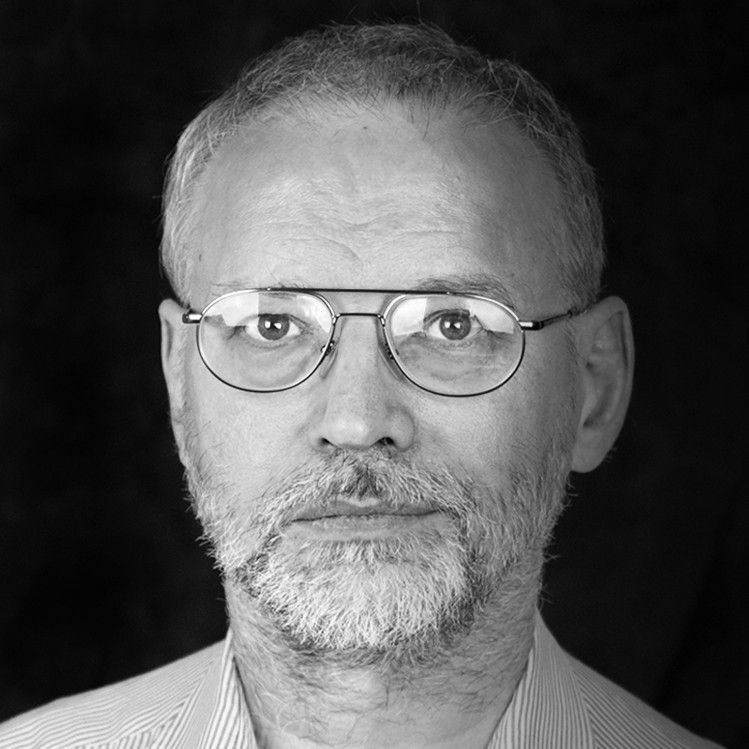
Dr. Jakob Jung is Editor-in-Chief of Security Storage and Channel Germany. He has been working in IT journalism for more than 20 years. His career includes Computer Reseller News, Heise Resale, Informationweek, Techtarget (storage and data center) and ChannelBiz. He also freelances for numerous IT publications, including Computerwoche, Channelpartner, IT-Business, Storage-Insider and ZDnet. His main topics are channel, storage, security, data center, ERP and CRM.
Contact via Mail: jakob.jung@security-storage-und-channel-germany.de