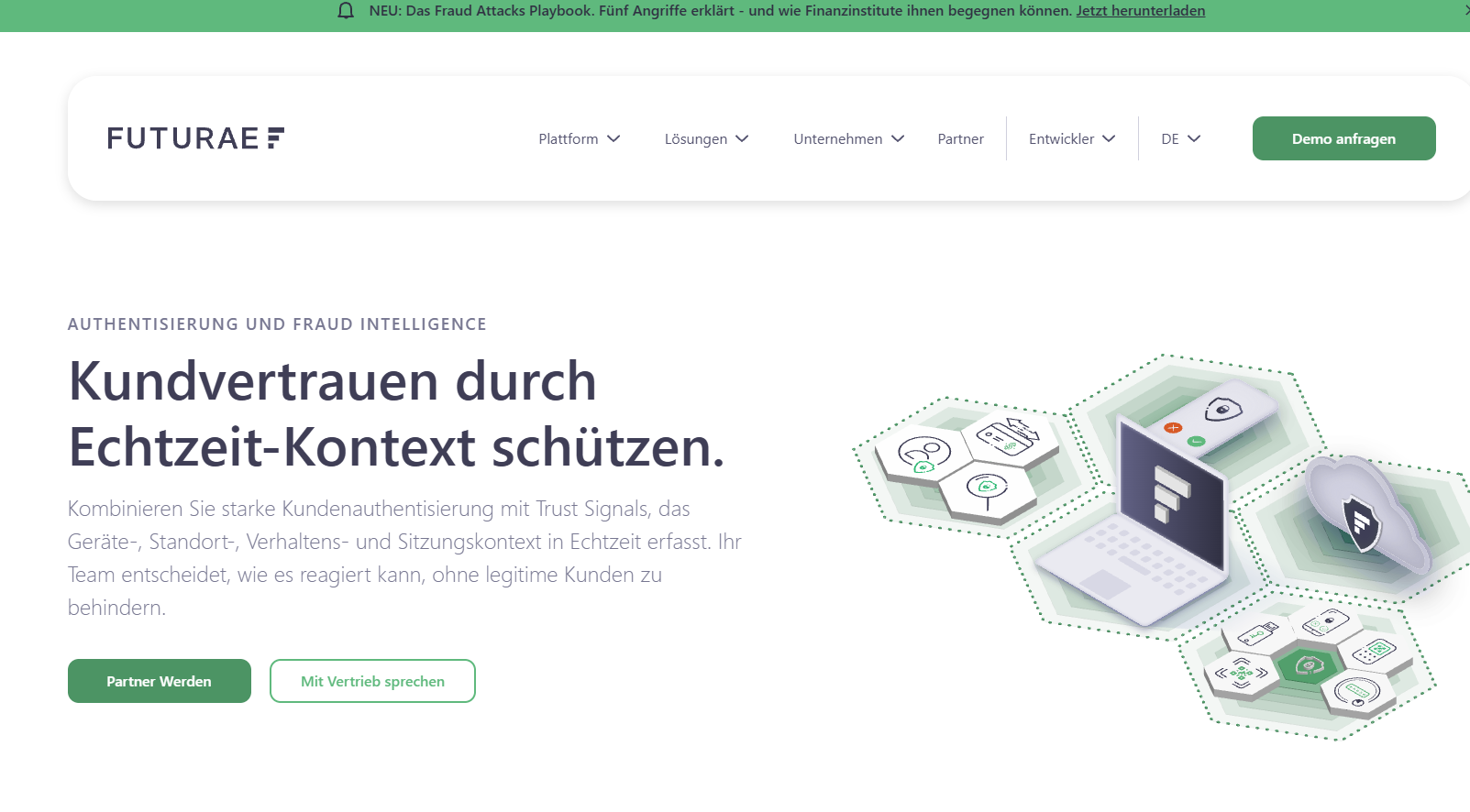
The Zurich-based authentication specialist Futurae is moving into real-time fraud detection. With Trust Signals, banks get the context to judge whether an interaction can be trusted, and Futurae is courting DACH channel partners to scale.
Authentication confirms who someone is, but not whether that person can be trusted at that very moment. Futurae, a spin-off of ETH Zurich, is positioning its new Trust Signals product in exactly this gap. In a conversation at it-sa, Alex Dingsburg, Head of Partnerships and Channel, and Velina Vlachou, Marketing Lead, explained how the company intends to grow in Europe and what role partners play.
The starting point is a shift in attack patterns. In many cases the login itself passes without error, and fraud succeeds precisely because of that. In tech-support scams, attackers persuade victims to install remote-access software and take over the session right after sign-in. With the QR-code trick, users unknowingly authorize a foreign session. MFA fatigue, forged front ends and social engineering during account recovery complete the picture. Authentication confirms the right person in all these cases, so the decisive question moves from identity to the trustworthiness of a specific interaction.
Trust Signals targets that question. According to Futurae, sensors collect raw data on the end device, either as an SDK in native apps or as JavaScript in the web front end, supplemented by a network sensor that enriches IP and HTTP header information. Futurae calculates the signals in its backend, and the customer retrieves them in real time via a Signals API, for example from an IAM system or a core banking application. Seven signals are available at launch, among them proximity of a user’s devices, geolocation and geovelocity, first use of a browser, an active phone call during a sensitive transaction, and remote-controlled browser sessions detected from mouse and keyboard patterns.
None of these signals triggers an action by itself. The decision stays with the institution, which can release or hold a transaction. Some values are deterministic, others rest on heuristics and can produce false alarms, and certain signals, such as location data, require the end user’s explicit consent. Trust Signals is meant to complement existing fraud defenses, not replace them.
Dr. Claudio Marforio, CEO and co-founder, puts the idea this way: “Authentication answers who someone is. Whether that person can be trusted at that very moment remains open, because the context of the interaction does not enter the check. We supply exactly this context and leave the assessment to the institution, which knows its customers and its risk policy best.”
In the conversation, Futurae described itself as smaller and more flexible than many competitors and as following a zero-trust approach. As a European provider, it says, it orients itself on regulation, which Vlachou called absolutely important. Private banks illustrate the design principle: Futurae does not know their clients, so the solution is anonymous by design. The anti-fraud solution is delivered from the cloud and billed as SaaS per user. The company puts implementation at one to two months, with a sandbox for easy onboarding and the migration running in the background. For integration, Futurae points to APIs for Entra and Active Directory or its own role as key system, and it stresses openness toward Microsoft, Swiss cloud providers, Cloudflare and many IAM partners. Passkeys, it notes, are not free of risk, which is why it combines them with its cloud approach.
The business case centers on operations. Fewer manual reviews, fewer support tickets and fewer costly callbacks are meant to relieve fraud teams. Futurae says the latest major update added a contextual layer that lets institutions know their customers better. The product roadmap follows EU regulation. The company points to DORA, in force for financial entities since January 2025, and to PSD3, which it describes as close to formal adoption and which tightens fraud-prevention duties and redistributes liability. Its expertise lies in finance and insurance, but it sees growing interest elsewhere, not least in government, where security awareness is rising.
Growth is to come largely through the channel. Futurae employs more than 70 people, with its office in Zurich and staff in Italy, Greece and Eastern Europe. It works with four partner types: OEMs, VARs, resellers and, in talks with two candidates, value-added distributors. A partner breakfast two months ago drew very positive feedback, and the company concluded that small events work better; direct webinars supplement them. Futurae also exhibits jointly with Ergon Airlock. For Germany and Austria it sees many opportunities and wants to offer partners a solution tailored to the German market, drawing on its experience with Swiss regulation. A webinar on real-time context in fraud detection is scheduled for 24 November 2026 at 14:00 CET.
How well Trust Signals works in practice will depend on the reliability of the individual signals and on how readily institutions integrate them. Futurae says it will expand the signal range at regular intervals, guided by the attack scenarios of existing customers.
Founded in 2016, Futurae is ISO 27001 certified and a member of the FIDO Alliance. According to the company, more than 130 banks, insurers, online shops and digital wallets worldwide use its platform.
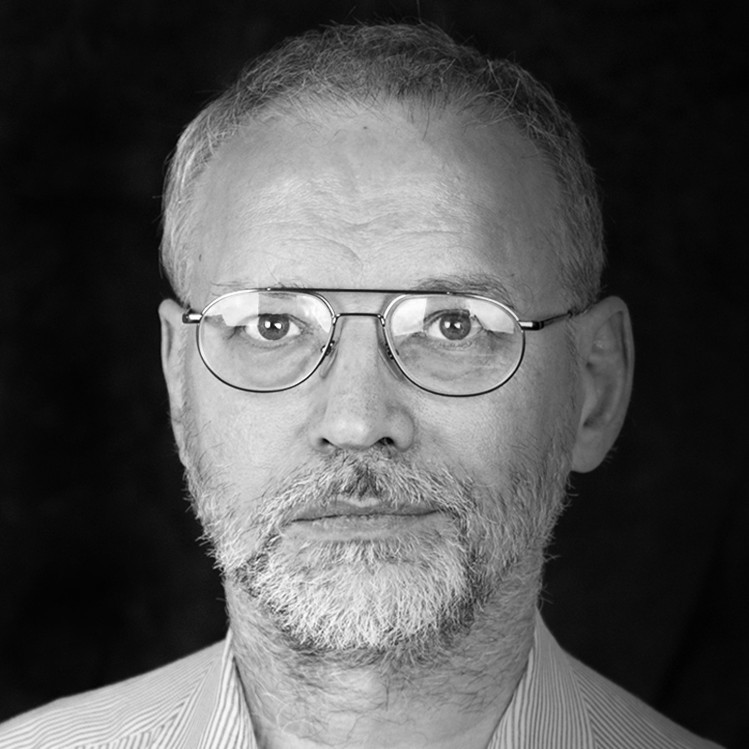
Dr. Jakob Jung is Editor-in-Chief of Security Storage and Channel Germany. He has been working in IT journalism for more than 20 years. His career includes Computer Reseller News, Heise Resale, Informationweek, Techtarget (storage and data center) and ChannelBiz. He also freelances for numerous IT publications, including Computerwoche, Channelpartner, IT-Business, Storage-Insider and ZDnet. His main topics are channel, storage, security, data center, ERP and CRM.
Contact via Mail: jakob.jung@security-storage-und-channel-germany.de