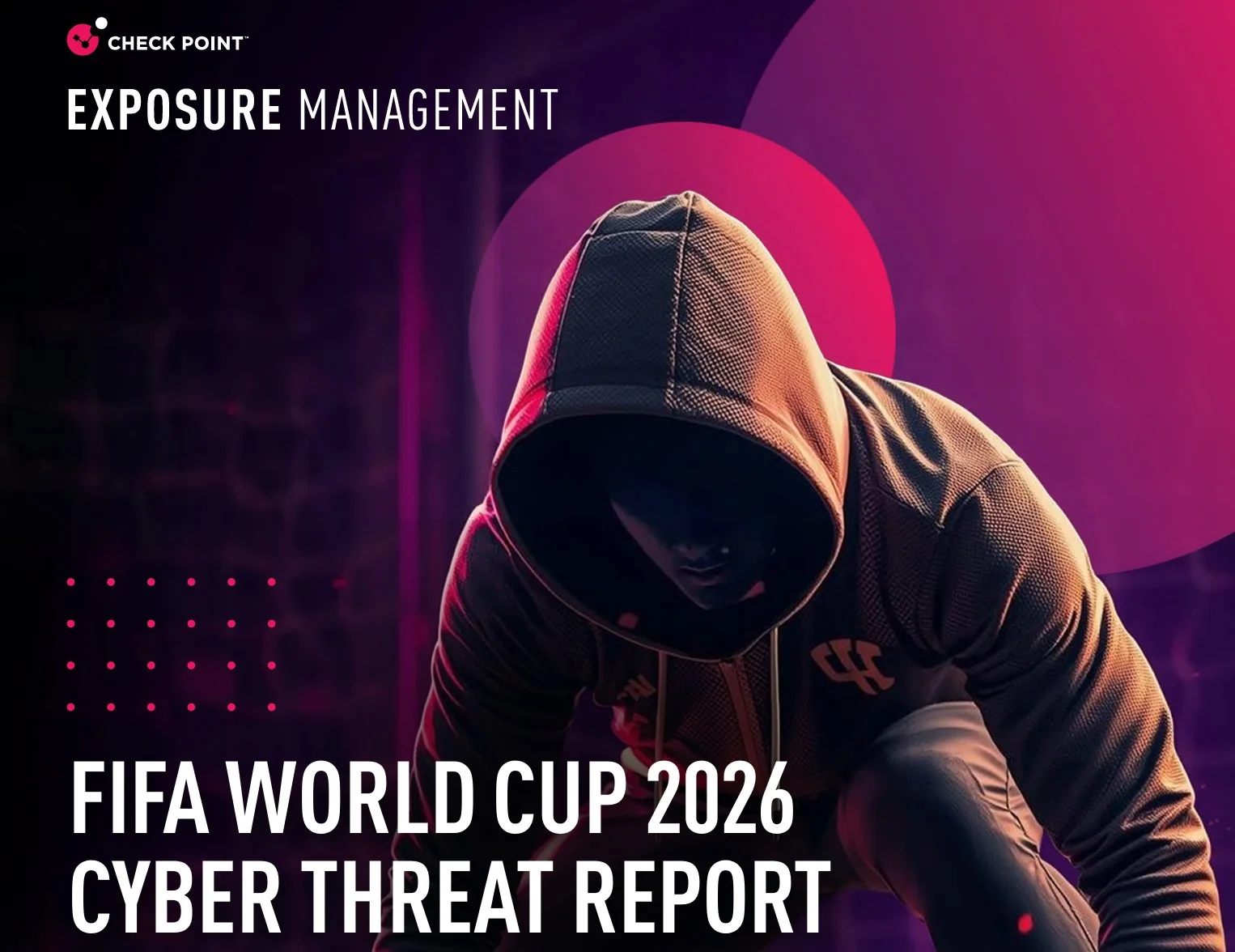
As the FIFA World Cup 2026 approaches, organizations in financial services, transportation, hospitality, and gambling face heightened cyber risks. The Check Point report details how threat actors exploit event-driven activity through fraud, disruption, and influence operations.
The FIFA World Cup 2026, hosted across multiple cities in the United States, Canada, and Mexico, will generate significant economic activity and global attention. According to the Check Point Exposure Management report, this scale also creates conditions for intensified cyber activity targeting financial services, transportation and hospitality providers, and gambling operators.
In the financial sector, attackers are capitalizing on surges in transactions related to ticketing, travel, merchandise, and sponsorships. Event-themed cryptocurrency scams, such as $WORLD CUP tokens, exhibit characteristics of rug-pull schemes, including opportunistic launches timed to tournament hype, low liquidity, and lack of verifiable affiliations with official organizers. Card-not-present fraud and social engineering campaigns mimic patterns seen in previous World Cups and Olympics, directing users to fraudulent sites that harvest payment details. Business Email Compromise remains a concern, with research indicating that over one-third of official partners have insufficient DMARC enforcement, facilitating domain spoofing in procurement chains. Additionally, anti-money laundering pressures are elevated due to FinCEN warnings about potential exploitation by trafficking networks amid increased cross-border flows.
Transportation and hospitality providers face operational risks due to near-zero tolerance for downtime. Ransomware and data extortion incidents have affected airlines, airports, and hotel chains in the lead-up period. Examples include the Qilin group’s attack on Tulsa International Airport in January 2026 and Clop’s claimed breach of Hilton. Hacktivist groups, notably Russia-aligned actors like NoName057(16) and Storm-1679, have conducted DDoS campaigns and shown interest in blending cyber and physical disruptions, as observed during the Milano-Cortina 2026 Winter Olympics. Fan-targeted fraud, including lookalike booking domains, has increased, exploiting trust in established brands.
The report identifies Russia-aligned threat actors as the most active cluster, combining DDoS, espionage, and influence operations. Groups such as Killnet, Anonymous Sudan, APT28, and Midnight Blizzard are highlighted for their relevance. Iranian, Chinese, and North Korean actors maintain lower-intensity but credible capabilities focused on espionage and financial gain. Historical parallels from the 2022 Qatar World Cup, Paris 2024 Olympics, and other events show recurring tactics: phishing for credentials, supply-chain compromises, and timed disruptions.
Cross-cutting risks include AI-enabled disinformation and coalition-based hacktivism, which amplify impact during peak visibility periods. The convergence of financially motivated crime and ideological operations complicates defense. Organizations are advised to strengthen email authentication, monitor for anomalous activity, enhance third-party risk management, and calibrate fraud and AML controls to expected volume surges.
The report concludes that sustained vigilance, information sharing, and adaptive security measures will be essential to manage exposure through the tournament period ending in July 2026. While the event presents opportunities, the documented threat patterns underscore the need for proactive preparation in an environment where even brief interruptions can carry outsized operational and reputational consequences.
Dr. Jakob Jung is Editor-in-Chief of Security Storage and Channel Germany. He has been working in IT journalism for more than 20 years. His career includes Computer Reseller News, Heise Resale, Informationweek, Techtarget (storage and data center) and ChannelBiz. He also freelances for numerous IT publications, including Computerwoche, Channelpartner, IT-Business, Storage-Insider and ZDnet. His main topics are channel, storage, security, data center, ERP and CRM.
Contact via Mail: jakob.jung@security-storage-und-channel-germany.de