
Heather Barnhart, DFIR Curriculum Lead & Head of Faculty at SANS Institute, explains why women in cybersecurity are particularly well-suited for AI leadership.
Artificial intelligence sounds competent. It responds fluently, phrases things precisely, and comes across so convincingly that people are all too ready to believe it – even when it’s wrong. That’s precisely the problem. And that’s precisely why women who have built careers in cybersecurity and related IT fields are uniquely positioned to take on leadership roles in the AI era. At first glance, this seems paradoxical. Why would a technology so often associated with engineers and data scientists bring to the forefront the very people who historically had to fight for their place in that world? The answer lies not in the technology itself, but in the skills required to deploy it responsibly. Women in cybersecurity have frequently built their careers in environments where mistakes aren’t academic corrections – they have real consequences, for companies, for clients, sometimes for national infrastructure. In these high-pressure environments, the bar for them is often set even higher than for their male colleagues. That demands discipline. It demands precision. It demands questioning assumptions and providing evidence before rendering judgment. And it teaches how dangerous blind trust can be. That mindset is exactly what many organizations lack when it comes to AI.
Outsourcing Thinking Multiplies Risk
One of the greatest risks in the AI age isn’t the technology itself – it’s the outsourcing of thinking. Analysts accepting AI summaries without scrutiny. Teams copying recommendations directly from AI agents into decision documents. Executives assuming that a system speaking so eloquently must have handled fact-checking on its own. It hasn’t. AI can assist with thinking – it can research, structure, accelerate. But it cannot replace thinking. When people forget that distinction, risk multiplies. This isn’t hypothetical; it’s happening. And women who have learned to scrutinize their own work – because others would if they didn’t – understand this principle viscerally. The habit of validating, verifying, and only then judging didn’t emerge from perfectionism. It often emerged from the experience of being held to a higher standard. What was once experienced as a burden turns out to be a competency.
When Convenience Becomes a Security Vulnerability
Another frequently underestimated risk lies in careless data sharing. It happens more often than you’d think: confidential documents are uploaded to public AI services without anyone considering where that data flows or who might access it. A concrete example: a small partner company uploaded internal client documents to an AI tool to speed up a task. The files were intercepted by attackers. Executives were subsequently extorted using information they didn’t even know had left the building. Data awareness, security thinking, and the discipline not to sacrifice security for convenience – these are qualities that come naturally in security-sensitive professions. Fields where women have been and continue to be particularly active: compliance, risk management, IT forensics. Fields where you learn that convenience and security rarely go hand in hand.
The Leadership Qualities the AI Era Demands
All of this leads to a simple but far-reaching conclusion: the skills the AI age most urgently needs are not technical skills in the traditional sense. They are mindsets. Critical thinking. Willingness to ask uncomfortable questions. A sense of accountability for outcomes. The discipline not to outsource judgment. Many women in cybersecurity and related fields have cultivated exactly that over years – often under conditions that didn’t make it easy. They’ve learned to work in systems that penalize mistakes and reward diligence. They’ve learned to earn trust rather than assume it. These are the leadership qualities needed to build a culture of responsible AI. Not in conference rooms philosophizing about AI strategy, but in the daily decisions: What do we feed the system? What do we believe it tells us? What do we take responsibility for? The success of AI in organizations ultimately doesn’t depend on the quality of the models. It depends on the quality of the people deploying them. And the best preparation for that role often comes from those who had to earn their place in a skeptical environment.
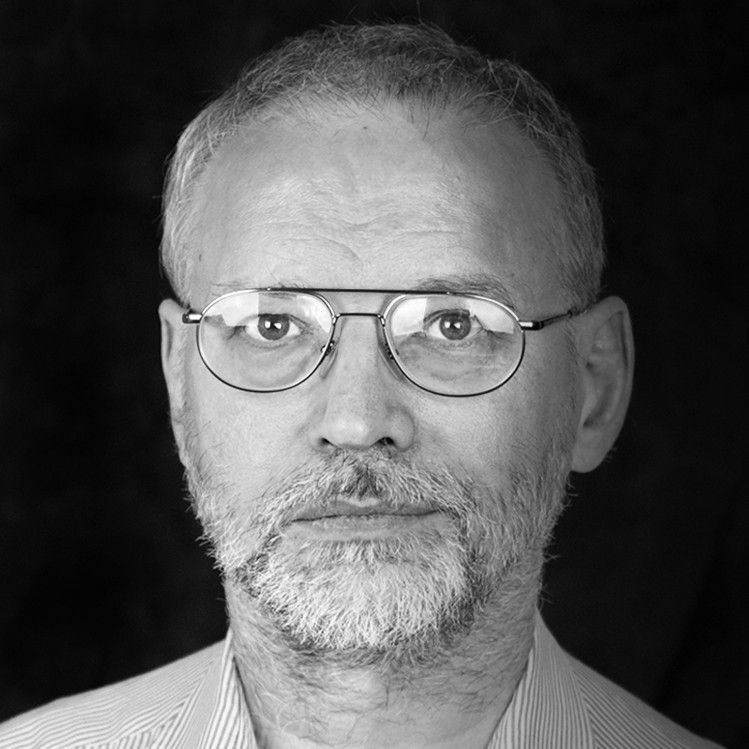
Dr. Jakob Jung is Editor-in-Chief of Security Storage and Channel Germany. He has been working in IT journalism for more than 20 years. His career includes Computer Reseller News, Heise Resale, Informationweek, Techtarget (storage and data center) and ChannelBiz. He also freelances for numerous IT publications, including Computerwoche, Channelpartner, IT-Business, Storage-Insider and ZDnet. His main topics are channel, storage, security, data center, ERP and CRM.
Contact via Mail: jakob.jung@security-storage-und-channel-germany.de