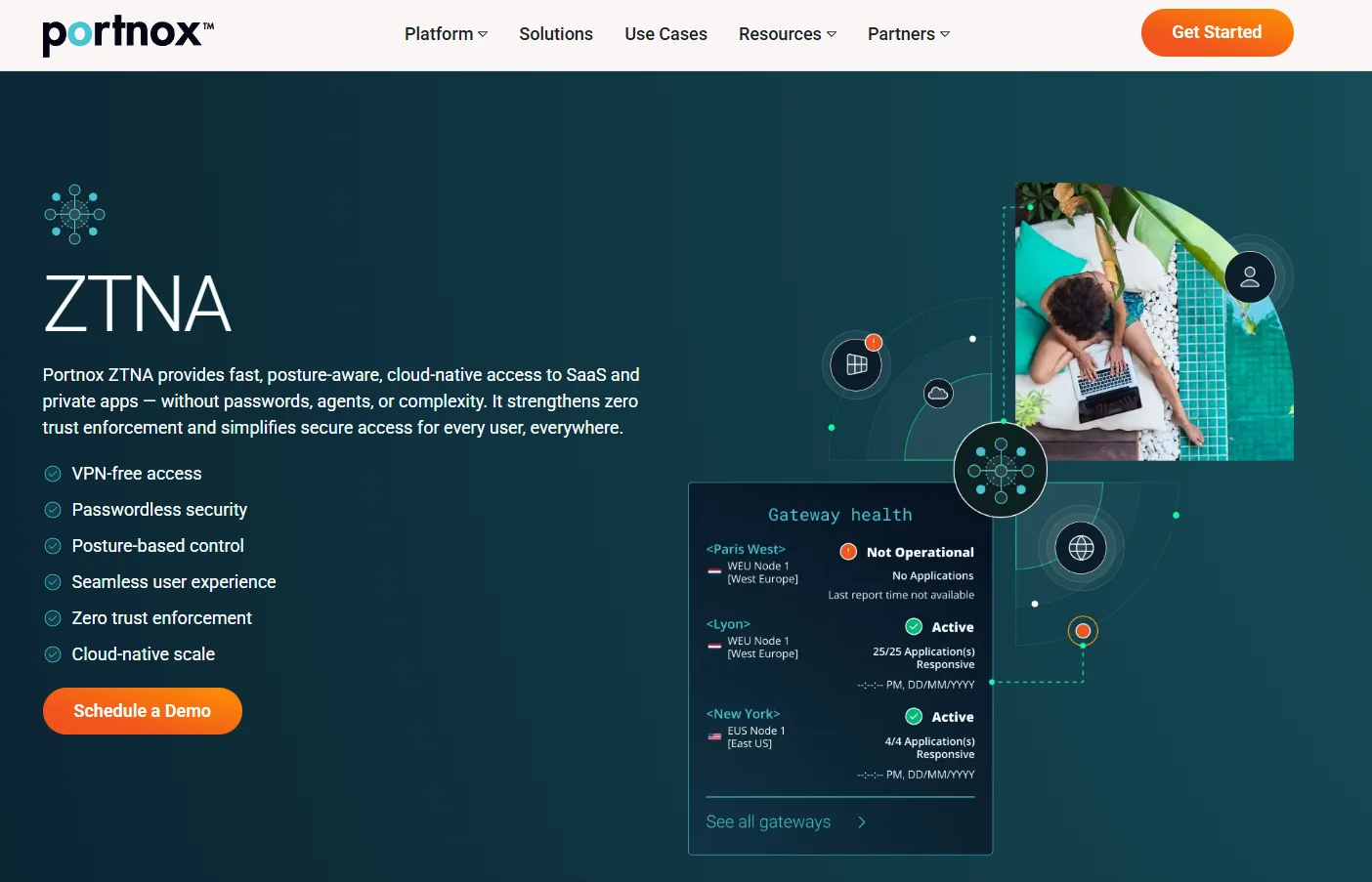
| Portnox erweitert ZTNA-Lösung, um passwortlosen Zugriff für RDP, SSH, VNC und Telnet, um credential-basierte Bedrohungen zu bekämpfen. | Portnox expands ZTNA solution to include passwordless access for RDP, SSH, VNC, and Telnet, addressing credential-based threats. |
| Der Cybersicherheitsanbieter Portnox hat seine Zero Trust Network Access-Lösung erweitert, um konsolenbasierte Unternehmensanwendungen abzudecken, und unterstützt nun passwortlose Authentifizierung über die Protokolle Remote Desktop Protocol, Secure Shell, Virtual Network Computing und Teletype Network.
Die Erweiterung entfernt Passwortanforderungen von administrativen Zugangspunkten, die Sicherheitsteams traditionell durch Anmeldeinformations-Tresore oder VPN-Zugang geschützt haben. Laut Branchenforschung sind credential-basierte Angriffe nach wie vor für etwa 80 % der Datenschutzverletzungen verantwortlich. Der Ansatz des Unternehmens baut auf seinem bestehenden Netzwerkzugangskontroll-Fundament auf, indem die zertifikatsbasierte Authentifizierung auf Systemverwaltungstools ausgeweitet wird. Organisationen können nun das gleiche passwortlose Framework, das sie für Web- und On-Premises-Anwendungen verwenden, auch auf Infrastrukturverwaltungsverbindungen anwenden. Technische Umsetzung Die Plattform führt eine kontinuierliche Überwachung der Gerätehaltung durch und wendet risikoadaptive Richtlinien an, bevor sie den Zugriff auf Konsolensitzungen gewährt. Das System lässt sich zur Identitätsprüfung in Unternehmens-Identitätsanbieter wie Okta, Azure AD und Google Workspace integrieren. Zugriffsentscheidungen umfassen Geräteüberprüfungen, Netzwerkkontext und Standortbewertung. Die Plattform widerruft den Zugriff automatisch, wenn sich die Gerätesicherheitsbedingungen ändern oder Risikoschwellenwerte überschritten werden. Marktkontext Eine kürzlich durchgeführte Forrester Total Economic Impact-Studie, die Portnox Cloud-Implementierungen untersuchte, ergab, dass Unternehmen eine Kapitalrendite von 287 % erzielten, das Risiko von Sicherheitsverletzungen um 75 % reduziert und die Bereitstellungszeiten für neue Standorte um 90 % beschleunigt wurden. Die Studie ergab Amortisationszeiten von unter sechs Monaten. Laut Portnox planen 93 % der Chief Information Security Officers, bis 2027 die VPN-Infrastruktur zu ersetzen, was die Nachfrage nach alternativen sicheren Zugriffstechnologien ankurbelt. „Unsere Expansion in konsolenbasierte Anwendungen zeigt, was passiert, wenn man die Angriffsfläche erheblich reduziert“, sagte Denny LeCompte, CEO von Portnox. Portnox-Kunden entfernen Passwörter und ersetzen VPNs, während sie gleichzeitig die Benutzererfahrung in ihrer gesamten Anwendungssuite verbessern. Funktionsumfang Die aktualisierte Plattform bietet rollenbasierte und standortbasierte Zugriffskontrollen mit Echtzeit-Richtlinien durchsetzung. Benutzer erhalten eine einheitliche Sicht auf autorisierte Ressourcen über Webanwendungen, Software-as-a-Service-Plattformen, lokale Systeme und konsolenbasierte Infrastruktur hinweg. Das System umfasst automatisierte Behebungs-Workflows für nicht konforme Endpunkte, die den Zugriff blockieren, bis Geräte die Sicherheitsrichtlinien des Unternehmens erfüllen. |
Cybersecurity provider Portnox has expanded its Zero Trust Network Access solution to cover enterprise console-based applications, adding support for passwordless authentication across Remote Desktop Protocol, Secure Shell, Virtual Network Computing, and Teletype Network protocols.
The expansion removes password requirements from administrative access points that security teams have traditionally protected through credential vaults or VPN access. According to industry research, credential-based attacks remain responsible for approximately 80% of data breaches. The company’s approach builds on its existing Network Access Control foundation by extending certificate-based authentication to system administration tools. Organizations can now apply the same passwordless framework they use for web and on-premises applications to infrastructure management connections. Technical Implementation The platform performs continuous device posture monitoring and applies risk-adaptive policies before granting access to console sessions. The system integrates with enterprise identity providers including Okta, Azure AD, and Google Workspace for identity verification. Access decisions incorporate device posture checks, network context, and location evaluation. The platform automatically revokes access when device security conditions change or risk thresholds are exceeded. Portnox designed the deployment to avoid network infrastructure changes, eliminating requirements for firewall modifications, VPN client installations, or additional endpoint agents. Market Context A recent Forrester Total Economic Impact study examining Portnox Cloud implementations found organizations achieved a 287% return on investment, with breach risk reduced by 75% and deployment times for new sites accelerated by 90%. The study indicated payback periods of under six months. According to Portnox, 93% of chief information security officers plan to replace VPN infrastructure by 2027, creating demand for alternative secure access technologies. „Our expansion into console-based applications shows what happens when you substantially reduce the attack surface,“ said Denny LeCompte, CEO of Portnox. „Portnox customers are removing passwords and replacing VPNs while improving the user experience across their application suite.“ Feature Set The updated platform provides role-based and location-based access controls with real-time policy enforcement. Users receive a unified view of authorized resources across web applications, software-as-a-service platforms, on-premises systems, and console-based infrastructure. The system includes automated remediation workflows for non-compliant endpoints, blocking access until devices meet organizational security policies. The secure enterprise access capabilities and Secure Access Portal enhancements are available immediately as part of the latest Portnox ZTNA release. |

Dr. Jakob Jung ist Chefredakteur Security Storage und Channel Germany. Er ist seit mehr als 20 Jahren im IT-Journalismus tätig. Zu seinen beruflichen Stationen gehören Computer Reseller News, Heise Resale, Informationweek, Techtarget (Storage und Datacenter) sowie ChannelBiz. Darüber hinaus ist er für zahlreiche IT-Publikationen freiberuflich tätig, darunter Computerwoche, Channelpartner, IT-Business, Storage-Insider und ZDnet. Seine Themenschwerpunkte sind Channel, Storage, Security, Datacenter, ERP und CRM.
Dr. Jakob Jung is Editor-in-Chief of Security Storage and Channel Germany. He has been working in IT journalism for more than 20 years. His career includes Computer Reseller News, Heise Resale, Informationweek, Techtarget (storage and data center) and ChannelBiz. He also freelances for numerous IT publications, including Computerwoche, Channelpartner, IT-Business, Storage-Insider and ZDnet. His main topics are channel, storage, security, data center, ERP and CRM.
Kontakt – Contact via Mail: jakob.jung@security-storage-und-channel-germany.de