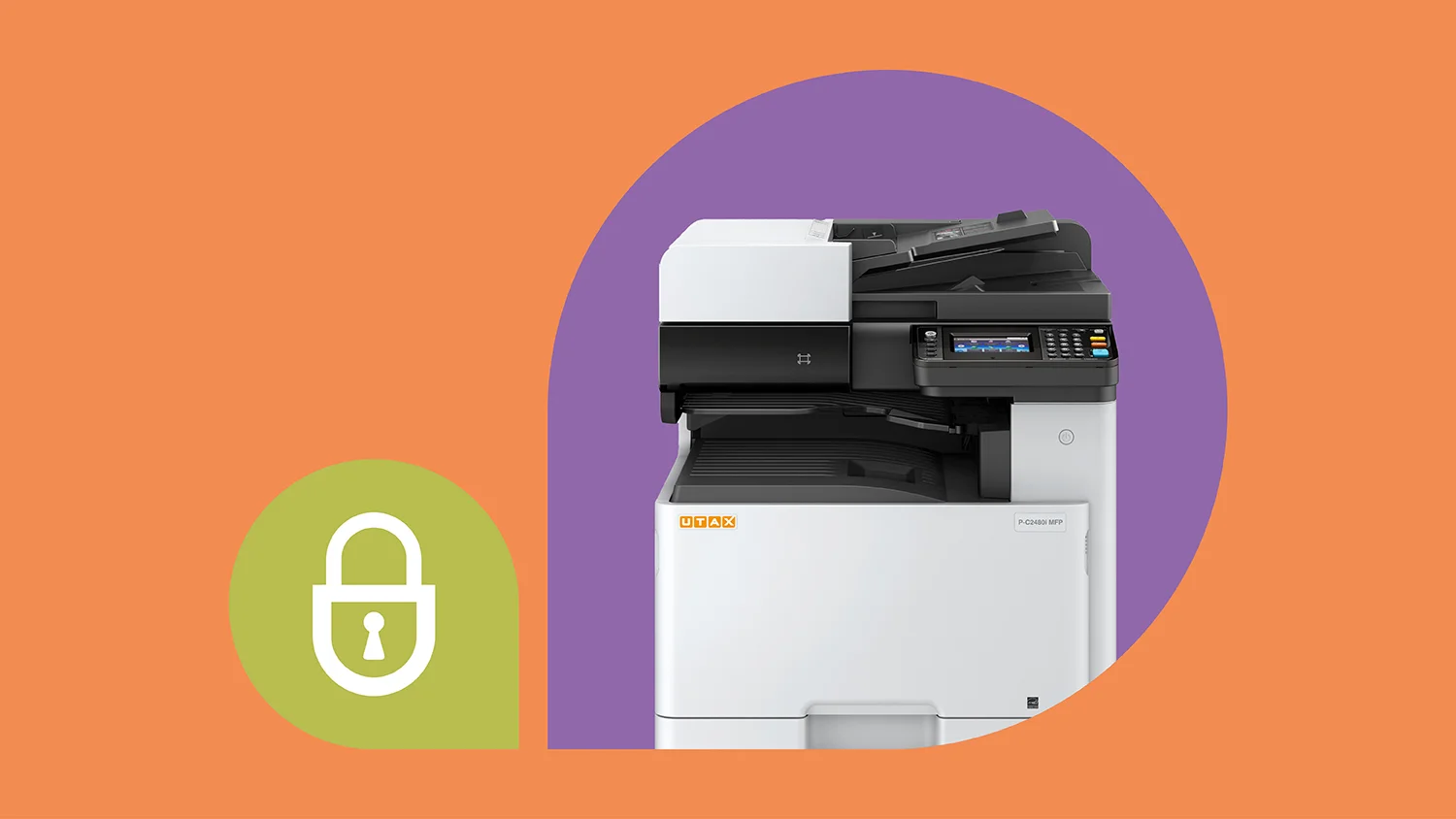
| Drucker sind ein unterschätztes Compliance Risiko. NIS-2 verstärkt den Druck, erklärt UTAX. | Printers are an underestimated compliance risk. NIS-2 increases the pressure, explains UTAX. |
| Durch die Cyberschutz-Verpflichtung NIS-2 steigt der Druck für Firmen, IT-Sicherheit ganzheitlich zu gewährleisten. Für höchste Sicherheit beim Drucken und Scannen sind UTAX MFP bereits ab Werk mit umfassenden Sicherheitsfunktionen ausgestattet – und können bei Bedarf um zusätzliche Optionen ergänzt werden. Darüber hinaus bietet UTAX seinen Fachhandelspartnern Webinare zur NIS-2-Richtlinie an, die Know-how vermitteln und helfen, Kunden gezielt zu beraten.
Die zweite EU-Richtlinie zur Netzwerk- und Informationssicherheit (NIS-2-Richtlinie) für den verpflichtenden Schutz wichtiger Anlagen und Unternehmen vor Cyberangriffen nimmt, anders als ihre Vorgängerregelung von 2016, nicht nur kritische Infrastrukturen (KRITIS) in die Pflicht – wie das Finanzwesen, Gesundheitsdienstleister oder Energieversorger – sondern erweitert den Kreis der Betroffenen erheblich. Unter den schätzungsweise rund 29.500 Firmen befinden sich auch mittelständische Unternehmen aus den verschiedensten Branchen. Betroffene Firmen und Institutionen sind gefragt, organisatorische und technische Schutzmaßnahmen zu implementieren. NIS-2: Weit mehr als nur KRITIS Die zweite EU-Richtlinie zur Netzwerk- und Informationssicherheit (NIS-2) ist kein Papiertiger. Anders als ihre Vorgängerregelung von 2016, die sich im Wesentlichen auf klassische kritische Infrastrukturen wie Finanzwesen, Gesundheitsdienstleister und Energieversorger beschränkte, greift NIS-2 deutlich weiter: Rund 29.500 Unternehmen und Institutionen in Deutschland sind nun betroffen – darunter zahlreiche mittelständische Firmen aus den verschiedensten Branchen. Mit der Eintragung in das Bundesgesetzblatt am 6. Dezember 2025 wurde das Umsetzungsgesetz in nochmals verschärfter Form in deutsches Recht überführt. Die Konsequenz: Seit Anfang 2026 sind betroffene Unternehmen verpflichtet, organisatorische und technische Schutzmaßnahmen zu implementieren und deren Wirksamkeit nachweisbar zu machen. Wer dieser Verpflichtung nicht nachkommt, riskiert empfindliche Bußgelder. Blinder Fleck in der IT-Sicherheit: der Drucker Während Firewalls, Endpoint-Protection und verschlüsselte E-Mails längst zum Standard gehören, fliegen Drucker und Multifunktionssysteme in vielen IT-Sicherheitskonzepten noch immer unter dem Radar. Dabei sind sie alles andere als harmlos: Ein ungesichertes MFP kann als Einfallstor für Angreifer dienen, vertrauliche Ausdrucke können im offenen Ausgabefach liegen, und veraltete Firmware öffnet Hackern Tür und Tor. In Zeiten stetig steigender Cyberangriffe sollten Unternehmen die NIS-2-Richtlinie auch als grosße Chance sehen, um die eigene Wettbewerbsfähigkeit zu stärken, sagt Philipp Wanner, Produktmanager bei UTAX. Die NIS-2-Richtlinie zwingt Unternehmen nun, auch ihre Druckinfrastruktur systematisch in ihre Sicherheitsstrategie einzubeziehen. Fünf Säulen für NIS-2-konforme Drucksicherheit Das Bundesamt für Sicherheit in der Informationstechnik (BSI) empfiehlt, die NIS-2-Regulierung als Antrieb zu nutzen, um konkrete technisch-organisatorische Maßnahmen umzusetzen. Für die Druckumgebung bedeutet das konkret: 1. Sicheres Fleet-ManagementVeraltete Firmware zählt zu den häufigsten Schwachstellen. Jedes Multifunktionssystem muss erfasst, überwacht und regelmäßig aktualisiert werden. Moderne Lösungen ermöglichen ein Remote-Management der gesamten Druckerflotte inklusive automatischer Firmware-Updates – damit bleibt keine Lücke ungepatcht. 2. Zugangs- und RechteverwaltungWer darf welche Dokumente drucken, scannen oder kopieren? Eine Nutzeranmeldung am Gerät begrenzt Zugriffe und dokumentiert Aktivitäten lückenlos. Das verhindert unbefugten Zugang und schafft die für NIS-2 notwendige Transparenz und Nachvollziehbarkeit. 3. Dokumentenschutz durch AuthentifizierungVertrauliche Ausdrucke dürfen nicht unbeaufsichtigt im offenen Ausgabefach liegen. Die sichere Druckfreigabe per PIN oder Chip stellt sicher, dass Aufträge erst nach Anmeldung am Gerät ausgegeben werden – so gelangen sensible Dokumente wie Gehaltsabrechnungen oder Verträge nicht in falsche Hände. 4. Automatische AngriffserkennungModerne MFP erkennen und melden Manipulationsversuche in Echtzeit. Sichere Startvorgänge (Secure Boot), kontinuierliche Systemprüfungen (Run Time Integrity Check) und Security Information and Event Management (SIEM) protokollieren verdächtige Aktivitäten und benachrichtigen IT-Administratoren sofort. 5. Technologie-Standards und ZertifizierungenAls verlässliche Leitplanken dienen der BSI IT-Grundschutz sowie die ISO 27001:2022 Zertifizierung. Festplattenverschlüsselung, sichere Boot-Prozesse, Authentifizierung und fortlaufende Integritätschecks gehören zum Mindeststandard moderner, NIS-2-konformer Druck- und Kopiersysteme. UTAX: NIS-2-Compliance ab Werk UTAX positioniert sich mit seinem MFP-Portfolio als Antwort auf die gestiegenen Sicherheitsanforderungen. Die Systeme sind herstellerseitig mit einem umfassenden Sicherheitspaket ausgestattet: Firmwareschutz, aktuelle Sicherheitsprotokolle, sichere Authentifizierung, Datenverschlüsselung durch ein standardmäßig enthaltenes Data Security Kit, regelmäßige Sicherheitsupdates und Echtzeit-Monitoring gehören zum Lieferumfang. Besonders hervorzuheben ist die Funktion Document Guard: Sie verhindert, dass als vertraulich gekennzeichnete Informationen beim Scannen oder Kopieren versehentlich oder missbräuchlich weitergegeben werden. Unsere Multifunktionssysteme verfügen über alle Produktklassen hinweg über einen sehr hohen Umfang an leistungsfähigen IT-Sicherheitsfunktionen. Mit UTAX MFPs sind Kunden somit stets bestmöglich geschützt – auch mit Blick auf NIS-2, betont Philipp Wanner. Fachhandelspartner fit für die NIS-2-Beratung Parallel zum technischen Angebot hat UTAX eine NIS-2-Webinar-Serie für seine Fachhandelspartner gestartet. Das Angebot wird gut angenommen: Zahlreiche Partner haben sich bereits informiert und sind nun in der Lage, Kunden gezielt bei der Absicherung ihrer Druckinfrastruktur gemäß NIS-2 zu beraten. Aktuelle Webinar-Termine finden sich im UTAX-Partnerportal. |
The NIS-2 cybersecurity obligation is putting pressure on companies to ensure comprehensive IT security. For maximum security when printing and scanning, UTAX MFPs come equipped with a variety of security features — and can be supplemented with additional options if needed. UTAX also offers webinars to its specialist retail partners on the NIS 2 directive to impart know-how and help them provide targeted advice to customers. Unlike its 2016 predecessor, the second EU directive on network and information security (NIS 2 Directive) not only applies to critical infrastructures (KRITIS), such as financial institutions, healthcare providers, and energy suppliers, but also significantly expands the affected group. These estimated 29,500 companies include small and medium-sized enterprises from a variety of industries. Affected companies and institutions must implement organizational and technical protective measures. Since the beginning of 2026, thousands of German companies have been required to determine if they are subject to the stricter NIS 2 directive. Those affected must demonstrate comprehensive protective measures, including those for their printer fleets. Multifunctional printers (MFPs) have long been more than just office equipment; they store, transmit, and process confidential documents, making them attractive targets for cybercriminals. The first BSI audits are expected as early as spring 2026. NIS 2 is much more than just KRITIS. The second EU directive on network and information security (NIS-2) is no paper tiger. Unlike its 2016 predecessor, which was essentially limited to traditional critical infrastructures, such as financial institutions, healthcare providers, and energy suppliers, NIS-2 has a much broader scope. Around 29,500 companies and institutions in Germany are now affected, including numerous medium-sized companies from a wide range of industries. On December 6, 2025, the implementation law was transposed into German law in an even stricter form with its entry into the Federal Law Gazette. Since the beginning of 2026, affected companies have been required to implement organizational and technical protective measures and demonstrate their effectiveness. Those who fail to comply risk heavy fines. A blind spot in IT security is the printer. While firewalls, endpoint protection, and encrypted emails have long been standard, printers and multifunction systems often remain unaddressed in IT security concepts. Yet, they are anything but harmless. An unsecured multifunction printer (MFP) can serve as a gateway for attackers. Confidential printouts can be left in the open output tray, and outdated firmware can open the door to hackers. In an era of escalating cyberattacks, companies should view the NIS 2 directive as a valuable opportunity to bolster their competitiveness, according to Philipp Wanner, product manager at UTAX. The NIS 2 directive now requires companies to include their printing infrastructure in their security strategy. Five Pillars of NIS 2-Compliant Printing Security The German Federal Office for Information Security (BSI) recommends using the NIS 2 regulation to implement specific technical and organizational measures. For the printing environment, this means, in concrete terms:
Outdated firmware is one of the most common vulnerabilities. Every multifunction system must be recorded, monitored, and updated regularly. Modern solutions enable the remote management of entire printer fleets, including automatic firmware updates, so no gaps remain unpatched.
Which users are allowed to print, scan, or copy which documents? Device user login limits access and documents activities seamlessly. This prevents unauthorized access and creates the transparency and traceability required for NIS-2 compliance.
Confidential printouts should not be left unattended in the output tray. Secure print release via PIN or chip ensures that jobs are only printed after logging in to the device, so sensitive documents, such as pay stubs or contracts, do not fall into the wrong hands.
Modern MFPs detect and report tampering attempts in real time. Secure boot processes and continuous system checks (run-time integrity checks) detect suspicious activities and notify IT administrators immediately. Security information and event management (SIEM) logs these activities.
The BSI IT-Grundschutz and ISO 27001:2022 certifications provide reliable guidelines. Hard disk encryption, secure boot processes, authentication, and continuous integrity checks are the minimum standard for modern NIS-2-compliant printing and copying systems. UTAX: Inherent NIS-2 compliance UTAX is positioning its MFP portfolio as the answer to increased security requirements. These systems come equipped with a comprehensive security package that includes firmware protection, up-to-date security protocols, secure authentication, data encryption via a standard Data Security Kit, regular security updates, and real-time monitoring. The Document Guard feature is particularly noteworthy. It prevents confidential information from being disclosed accidentally or maliciously during scanning or copying. Our multifunctional systems, spanning all product classes, offer an exceptionally robust suite of IT security features. With UTAX MFPs, customers are always optimally protected, including with regard to NIS 2, emphasizes Philipp Wanner. Partner readiness for NIS 2 consulting. Alongside its technical offerings, UTAX has launched a series of NIS 2 webinars for its retail partners. Numerous partners have signed up and are now able to advise customers on securing their printing infrastructure in accordance with NIS 2. Current webinar dates are available on the UTAX partner portal. |

Dr. Jakob Jung ist Chefredakteur Security Storage und Channel Germany. Er ist seit mehr als 20 Jahren im IT-Journalismus tätig. Zu seinen beruflichen Stationen gehören Computer Reseller News, Heise Resale, Informationweek, Techtarget (Storage und Datacenter) sowie ChannelBiz. Darüber hinaus ist er für zahlreiche IT-Publikationen freiberuflich tätig, darunter Computerwoche, Channelpartner, IT-Business, Storage-Insider und ZDnet. Seine Themenschwerpunkte sind Channel, Storage, Security, Datacenter, ERP und CRM.
Kontakt – Contact via Mail: jakob.jung@security-storage-und-channel-germany.de